The full answer
It is worth being clear about what AVOID means here. We are not saying ordinary sweet almonds are a dog poison. Veterinary advice sources do not list them alongside foods such as grapes, xylitol or macadamia nuts. Our recommendation is based on practical risk rather than toxicity.
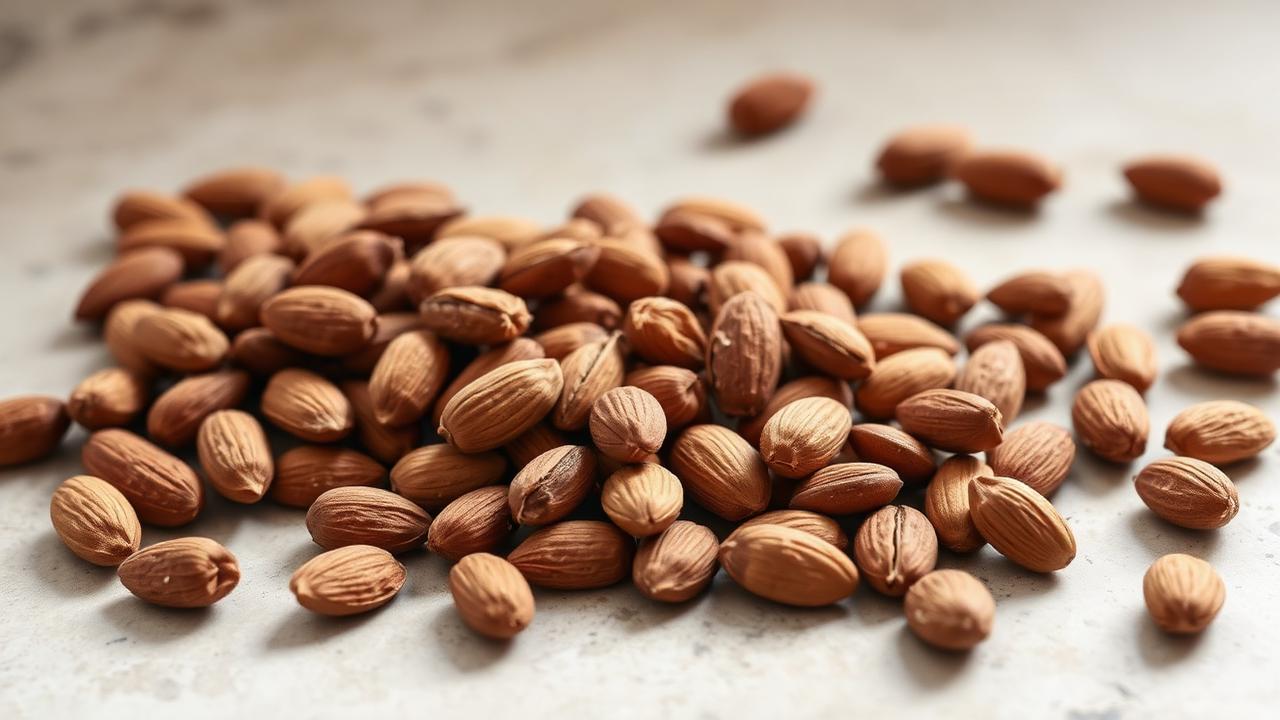
The first practical problem is physical. Almonds are hard, roughly the size of a small dog's airway, and dogs frequently swallow food without chewing it properly. That combination makes whole nuts a genuine choking hazard, and in smaller dogs a possible obstruction risk further down.
The second is fat. Nuts are energy-dense, and a dog that helps itself to a bowlful can end up with vomiting or diarrhoea. Very fatty meals are also discussed in veterinary advice as a trigger for pancreatitis in susceptible dogs, though the strength of that link varies between individual animals and we would not overstate it for a handful of nuts.
The third is everything that comes with almonds in real life: salt, smoke flavouring, honey coating, chocolate coating, or a seasoning mix that may include onion or garlic powder. Those additions are often a bigger problem than the nut itself.
Bitter almonds are a separate matter. They are not the almonds sold as snacks in supermarkets, and they contain cyanogenic compounds, which is why they are not sold for casual eating. If you keep them for baking, store them well away from your dog and speak to a vet about any ingestion.
Are Almonds Good for Dogs?
Not particularly. Almonds contain fat, protein and some vitamin E, but nothing your dog cannot get more safely from their normal diet.
There is no nutritional argument strong enough to outweigh the choking and fat concerns, so we treat almonds as a food to leave out rather than one to ration.
Risks and Things to Know
- Choking on a whole nut, especially in small and medium dogs that bolt their food.
- Blockage in the digestive tract if several whole nuts are swallowed.
- Digestive upset from the fat content: vomiting, loose stools or a reduced appetite.
- Salted, smoked, honey-roasted or chocolate-coated almonds add salt, sugar or, in the case of chocolate, a genuinely toxic ingredient.
- Seasoned nut mixes may contain onion or garlic powder, which are a real concern for dogs.
- Bitter almonds, which are not the ordinary snack variety, contain cyanogenic compounds and should be kept away from pets entirely.
How Much Can Dogs Eat?
We do not recommend feeding almonds as a treat at all, so there is no portion we would suggest.
If your dog picks up a single plain almond and swallows it without trouble, that is usually a small event rather than an emergency. Watch for coughing, retching, repeated vomiting or a dog that seems uncomfortable, and call your vet if any of that appears.
Contact your vet promptly if the almonds were chocolate-coated, if a large quantity was eaten, or if your dog is very small.
Dogs with a history of pancreatitis or a sensitive stomach should be kept away from nuts altogether.
How Should I Prepare It?
- Keep nut bowls off coffee tables and low surfaces, particularly when guests are visiting.
- Choose a plain dog-friendly treat rather than trying to make almonds safe by chopping them.
- If you use almond butter in home baking for dogs, check the ingredient list for added sweeteners and keep portions very small; a nut butter with no added sweetener is the only sort worth considering.
- Store almond flour and baking supplies in closed containers.
- Never offer chocolate-coated or heavily seasoned nuts under any circumstances.