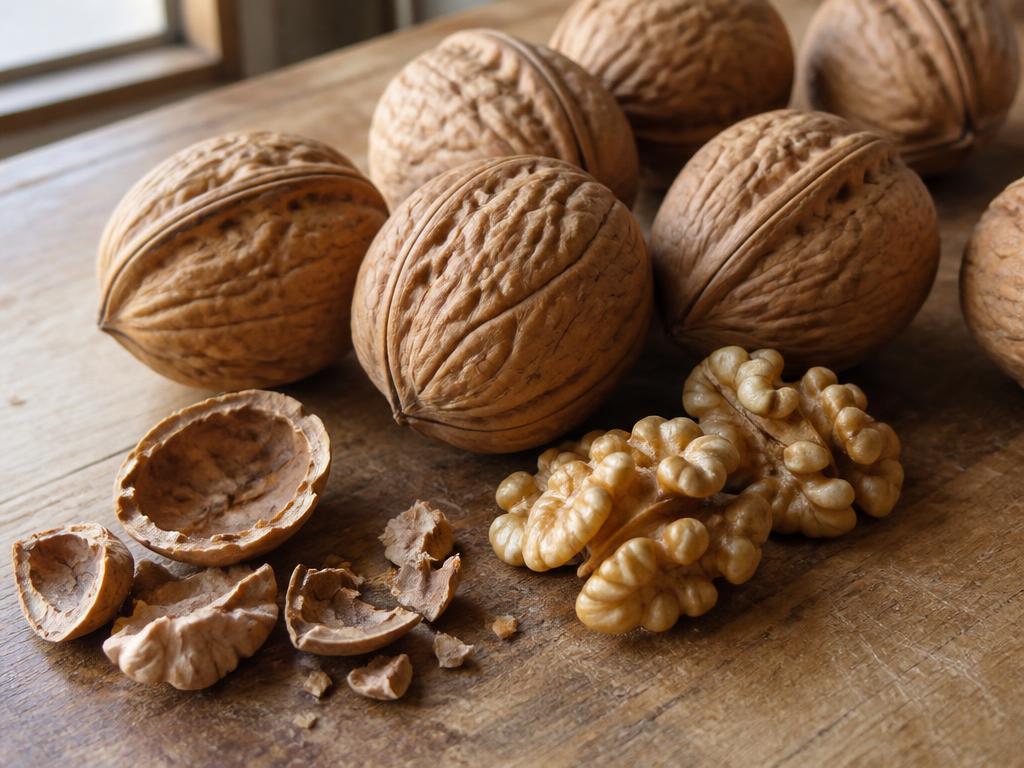
The full answer
Let us be accurate first. The common English walnut sold in supermarkets is not a classic dog poison, and it is not equivalent to a macadamia nut. A dog that eats one plain walnut kernel is usually not facing a poisoning emergency, and we would rather say that clearly than exaggerate.
We still rate walnuts AVOID, because several separate concerns stack up in a way that makes them a poor choice. The first is fat. Walnuts are one of the fattier nuts, and a rich, fatty snack can cause vomiting and diarrhoea, and is discussed in veterinary sources as a possible trigger for pancreatitis in susceptible dogs. The second is physical: whole walnuts and shell fragments are genuine choking hazards, and shells in particular are hard, sharp-edged and a recognised cause of intestinal obstruction, which can require surgery.
The third concern is mould, and it is the one people underestimate. Nuts, and walnuts especially, can develop moulds that produce tremorgenic mycotoxins. Ingestion of mouldy nuts, or of nuts that have fallen and lain on damp ground, is associated with tremors, wobbliness and in severe cases seizures. That is a veterinary emergency. Walnuts under a tree in a garden are exactly the scenario that causes these cases, and it is another reason we would rather dogs did not learn to hunt for them.
The fourth concern is black walnut, which is a different tree from the English walnut. Veterinary sources treat black walnut with more caution: ingestion, particularly of old, mouldy or decaying nuts and hulls from beneath the tree, has been associated with vomiting, tremors and neurological signs in dogs. We would keep dogs away from black walnut trees and any fallen material.
Finally, packaged walnuts are frequently salted, candied, spiced or coated in chocolate, and each of those adds a problem of its own. Put all of this together and there is no version of a walnut that we would recommend giving a dog. That is what AVOID means here: a conservative recommendation built from several real risks, not a claim that every walnut exposure is dangerous.
Are Walnuts Good for Dogs?
No. Walnuts are rich in fat and provide omega-3 in a form of more interest to people than to dogs, and a dog eating a complete diet gains nothing from them. Given the fat load, the choking and obstruction risk, the mould concern and the existence of the black walnut, there is no case for feeding them. Safer, lower-fat treats do the job without any of this.
Potential benefits
- The common English walnut is not a classic dog poison, so a single plain kernel is usually not an emergency
Risks and Things to Know
- High in fat, which can cause vomiting and diarrhoea and may contribute to pancreatitis in susceptible dogs
- Whole nuts are a choking hazard, and shells are a recognised cause of intestinal obstruction
- Mouldy walnuts can contain tremorgenic mycotoxins associated with tremors, wobbliness and seizures
- Black walnuts are treated with more caution by veterinary sources, particularly old or decaying nuts and hulls
- Fallen nuts under a tree may be damp, mouldy or decaying, and are a common source of exposure
- Packaged walnuts are often salted, candied, spiced or chocolate-coated
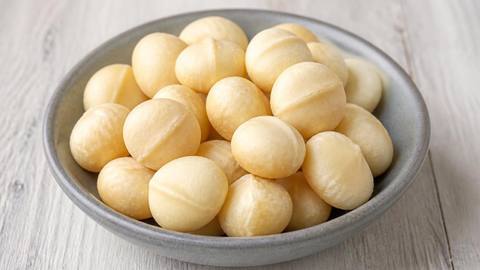
- Nuts from a mixed selection may include macadamia nuts, which cause a recognised toxicosis in dogs
How Much Can Dogs Eat?
We do not recommend feeding walnuts, so there is no portion we would suggest. If your dog has eaten a single plain kernel and is otherwise well, that is usually a monitoring situation rather than an emergency.
Contact your vet promptly if a quantity was eaten, if shells were swallowed, if the nuts were mouldy or came from beneath a tree, if they may have been black walnuts, or if they were salted, candied or chocolate-coated.
Dogs with a history of pancreatitis, dogs on a low-fat diet and small dogs are the ones we would be most cautious about.
How Should I Prepare It?
- The practical answer is not to feed walnuts at all
- Never give a dog walnuts in their shells, and do not let a dog chew shell fragments
- Never allow a dog to pick up fallen nuts from under a tree, where mould and decay are likely
- Keep dogs away from black walnut trees and any hulls or nuts around them
- Store nuts in closed cupboards rather than open bowls on low tables
- Avoid salted, candied, spiced and chocolate-coated nuts entirely, and skip mixed nut selections, which may include macadamias