The full answer
Coconut flesh is not listed as toxic to dogs, and a small piece of plain fresh coconut is not something to panic about. That is the honest headline. Where coconut earns a LIMIT rating is in what it is made of: coconut flesh and coconut milk are high in fat, and fat is the practical reason to keep portions small.
In real terms, that means a dog who eats a decent amount of coconut is likely to end up with a loose, uncomfortable stomach. Vomiting, diarrhoea and greasy stools are the common outcomes. Very rich meals are also discussed in veterinary sources as a possible trigger for pancreatitis in susceptible dogs, which is a good reason to keep coconut occasional rather than regular, and to leave it out entirely for dogs with a history of pancreatitis or on a low-fat diet.
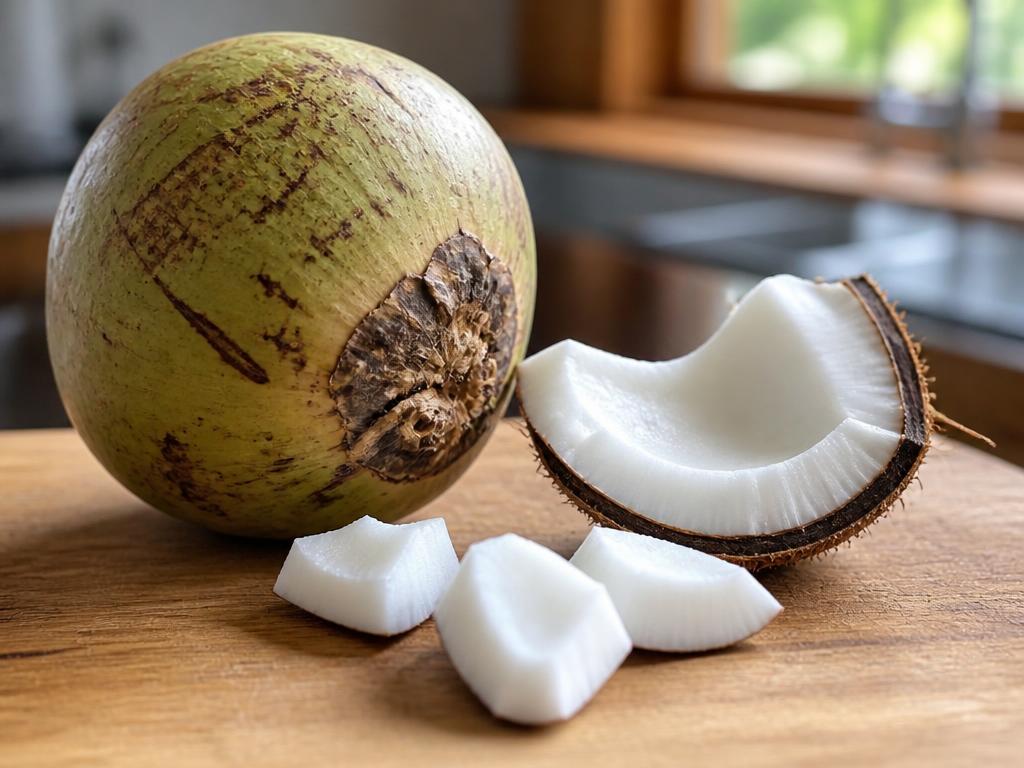
The shell and husk are a separate, more mechanical concern. They are hard, fibrous and completely indigestible, and pieces can splinter, catch in the throat or cause an intestinal blockage. A coconut shell is not a chew toy, and husk fibres are not something a dog should be gnawing on. Keep both well away, particularly from dogs who chew everything.
Most coconut in a kitchen is not plain coconut. Desiccated and shredded coconut is usually sweetened, coconut in desserts arrives with sugar, chocolate or cream, and coconut water and flavoured coconut drinks can be sweetened too. Some sweetened products contain xylitol, which is a serious poisoning risk for dogs, so the label matters more than the coconut does.
On coconut oil: you will find a great many claims online about coconut oil improving a dog's coat, immunity, joints or breath. The evidence behind those claims is weak, and we are not going to repeat them. Coconut oil is a fat. Giving a dog spoonfuls of any fat can cause digestive upset and adds significant calories. If you are considering coconut oil for a specific problem, discuss it with your vet rather than starting it on the strength of a blog post.
Is Coconut Good for Dogs?
Not particularly. Coconut provides fat, fibre and some minerals, but nothing a dog eating a complete diet is short of. We would not describe coconut as beneficial for dogs, and we do not think the popular claims about coconut oil hold up well enough to repeat. It is a treat some dogs enjoy the taste of, and that is the reasonable case for offering a small amount.
Potential benefits
- Plain coconut flesh is not toxic to dogs, so a small accidental amount is not usually an emergency
- Provides fibre and some minerals, though nothing a complete diet lacks
- A novel taste and texture some dogs enjoy as an occasional treat
Risks and Things to Know
- High in fat, which can cause vomiting, diarrhoea and greasy stools
- Rich, fatty foods are discussed as a possible trigger for pancreatitis in susceptible dogs
- Coconut shell and husk are hard and fibrous, and are choking and obstruction hazards
- Sweetened, desiccated and shredded coconut adds sugar, and some sweetened products may contain xylitol
- Coconut desserts often contain chocolate, cream or other ingredients that are unsuitable for dogs
- Coconut oil adds significant calories and can loosen stools, and the popular health claims for it are not well supported
How Much Can Dogs Eat?
A small piece of plain fresh coconut flesh is enough for a first try, and coconut should remain an occasional treat rather than a regular addition. Extras are usually best kept to a small share of the day's calories.
We do not give a set amount, because the sensible portion depends heavily on the size of the dog and how well they tolerate fat. If loose stools follow, the portion was too big or coconut does not suit your dog.
Dogs with a history of pancreatitis, dogs on a low-fat or prescription diet, and overweight dogs should not be given coconut.
How Should I Prepare It?
- Use fresh, plain coconut flesh only, with no sugar or flavourings
- Remove every trace of shell, husk and brown fibrous skin
- Cut it into small pieces suited to your dog's size
- Offer a small amount the first time and see how the next day goes
- Avoid sweetened desiccated or shredded coconut, coconut desserts and chocolate-coated coconut
- Check labels on any coconut product for xylitol, and never leave a coconut shell out as a chew