The full answer
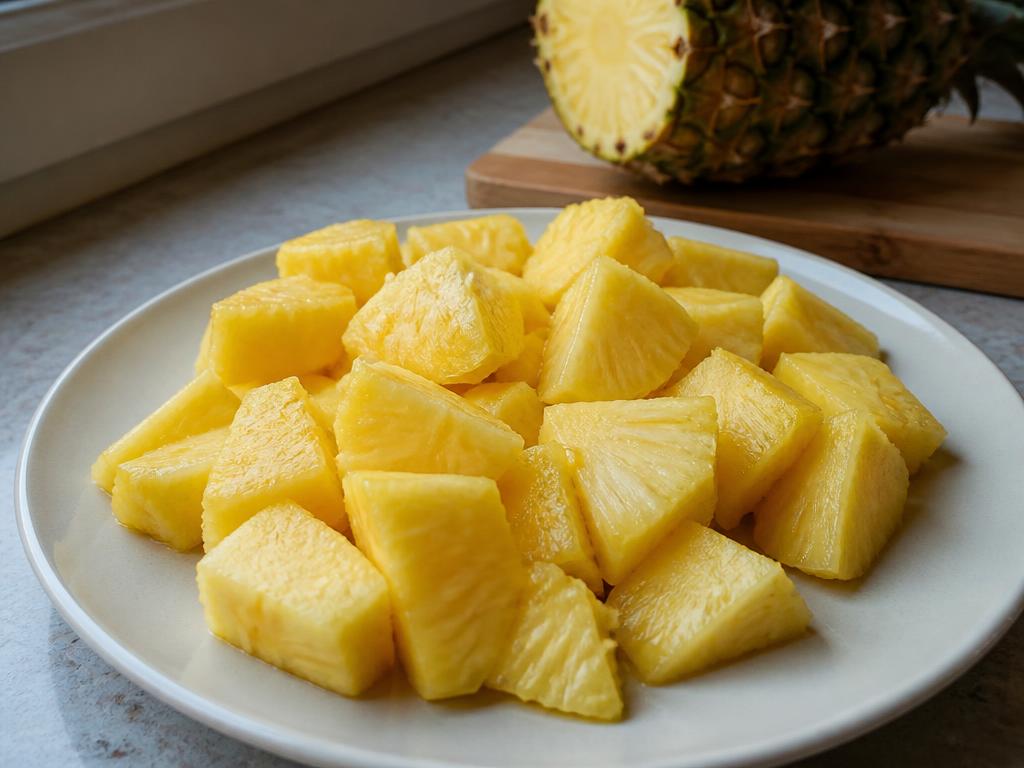
Plain fresh pineapple flesh is commonly listed among fruits dogs can have in small amounts. Cut into bite-sized pieces, it makes a juicy occasional treat.
Pineapple is sweet, and the sugar adds up quickly if you are generous, so small portions are the sensible approach. Some dogs also find pineapple quite acidic and may simply not enjoy it.
The parts that cause problems are the ones people do not eat either: the spiky crown, the tough prickly skin and the hard fibrous core. These are difficult to chew and swallow and should not be fed intentionally.
Is Pineapple Good for Dogs?
Plain fresh pineapple flesh in small pieces
Plain frozen pineapple chunks, cut small, as an occasional treat
Served on its own rather than mixed with sweetened products
Potential benefits
- Juicy, hydrating occasional treat with fiber and natural nutrients
- Easy to cut into very small pieces for portion control
- A fresh alternative to sugary commercial treats
Risks and Things to Know
- Skin, crown and core are tough and can be a choking or obstruction risk
- Natural sugar means excess is not appropriate
- Too much can cause loose stools or an upset stomach
- Canned pineapple in syrup adds significant sugar and is not recommended
- Dried pineapple concentrates sugar into a small volume
How Much Can Dogs Eat?
No single amount is right for every dog — size, calorie needs, health and the overall diet all matter.
Keep treats a small share of total daily calories and let a complete balanced diet do the rest.
Because of the sugar, a few small pieces is usually more than enough.
Check with your vet if your dog has weight, blood-sugar or digestive issues.
How Should I Prepare It?
- Cut off the crown and slice away all of the tough outer skin.
- Remove the hard central core.
- Cut the remaining flesh into small, bite-sized pieces.
- Serve plain — no syrup, sugar or sweetened sauces.
- For a frozen version, freeze plain fresh pieces already cut to size.