The full answer
Watermelon flesh contains nothing known to be toxic to dogs and is mostly water, which makes it a popular hot-weather treat.
Preparation matters more than with most fruits: the rind is tough and hard to digest, and seeds can cause problems in quantity, especially for small dogs.
Why plain flesh is SAFE: the red flesh is mostly water, low in calories and not toxic to dogs. The concerns are about the other parts and the amount — the tough rind can cause choking or an intestinal blockage, many seeds can be a choking or blockage risk, especially in small dogs, and a large helping of any watery, sugary fruit can upset the stomach. Dogs with diabetes may need to avoid it; ask your vet.
Is Watermelon Good for Dogs?
Watermelon is around 90% water, low in calories and contains vitamins A, B6 and C.
It is a refreshing snack, not a hydration strategy — dogs still need constant access to fresh water.
Potential benefits
- Very hydrating and low in calories
- Popular frozen as a summer treat
- Soft and easy to chew
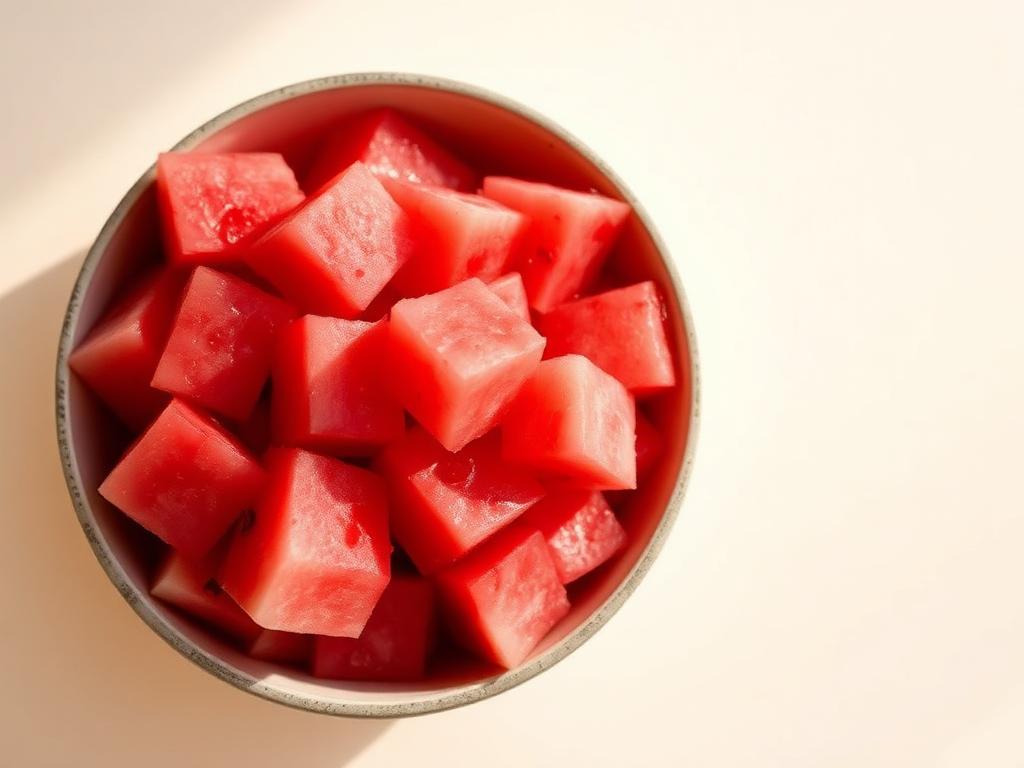
- Easy to portion into cubes
Risks and Things to Know
- Rind is tough and can cause an intestinal blockage or vomiting
- Seeds may cause blockages in small dogs if eaten in quantity
- High water and sugar content can cause loose stools in large amounts
- Watermelon-flavoured sweets or drinks are not suitable for dogs
How Much Can Dogs Eat?
A few small cubes is enough for most dogs.
Portion size depends on your dog's weight, diet and health; check with your vet for dogs with diabetes or weight issues.
How Should I Prepare It?
- Cut away all rind, including the pale green part.
- Remove seeds, or use seedless watermelon.
- Cube the flesh to a size your dog can chew.
- Freeze cubes for a longer-lasting summer treat.