The full answer
Honeydew is a mild, watery melon and the flesh is a reasonable occasional treat for dogs. Like watermelon and cantaloupe, it is mostly water, which is part of why melon is such a popular warm-weather treat.
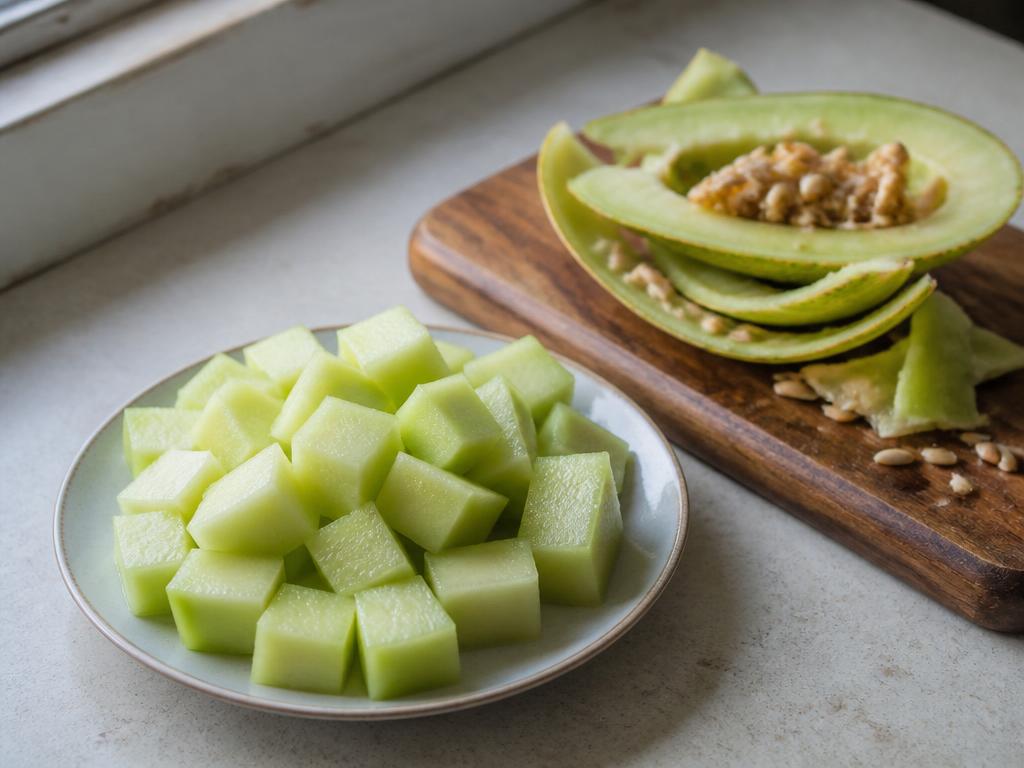
The rind is the part to keep away from your dog. It is tough, difficult to digest and a realistic obstruction risk if a dog chews off and swallows a large piece — a particular concern for dogs who help themselves to fruit left on a counter. The seeds are best scooped out too; they are not a poisoning concern, but there is no reason to serve them.
Sugar is the reason we treat melon as an occasional treat rather than a daily one. Honeydew is sweet, and sweet fruit adds calories that are easy to overlook when the pieces look small and harmless. For dogs who are overweight, diabetic, or on a diet their vet has set, melon should be cleared with the vet first rather than added casually.
Is Honeydew Good for Dogs?
Honeydew is mostly water with some fibre and natural sugar, and it is low enough in calories that a couple of cubes make a light treat. It is refreshing rather than nutritious for dogs, and it should not be thought of as a way to hydrate a dog — fresh drinking water does that job. Offer it because your dog enjoys it, not because it adds anything to their diet.
Potential benefits
- Very high water content, which suits warm days
- Soft and easy to chew, including for older dogs
- Simple to cut into small, controlled pieces, and works frozen
Risks and Things to Know
- The rind is tough, hard to digest and a genuine obstruction risk if swallowed
- Seeds are worth removing rather than serving
- Natural sugar adds up quickly if melon becomes a daily habit
- Large amounts of watery fruit commonly cause loose stools
- Melon in fruit salads or desserts may include grapes, syrup or sweeteners that are not suitable
How Much Can Dogs Eat?
A couple of small cubes suits most dogs, and less for a small dog. It is a treat, not a serving of food.
Keep treats to a small share of the day's calories, and check with your vet before offering sweet fruit to a dog with diabetes, weight-management needs or a history of pancreatitis.
How Should I Prepare It?
- Cut the melon open and scoop out the seeds
- Slice the flesh away from the rind completely — never hand your dog a rind-on wedge
- Cut the flesh into bite-sized cubes suited to your dog
- Serve plain, chilled or frozen; no sugar, syrup, yoghurt or cream
- Put the rind straight in a bin your dog cannot reach