Frozen Watermelon Yogurt Bites

Blend, pour, freeze. Use watermelon flesh only, with the rind and seeds removed, and a plain yogurt with nothing added.

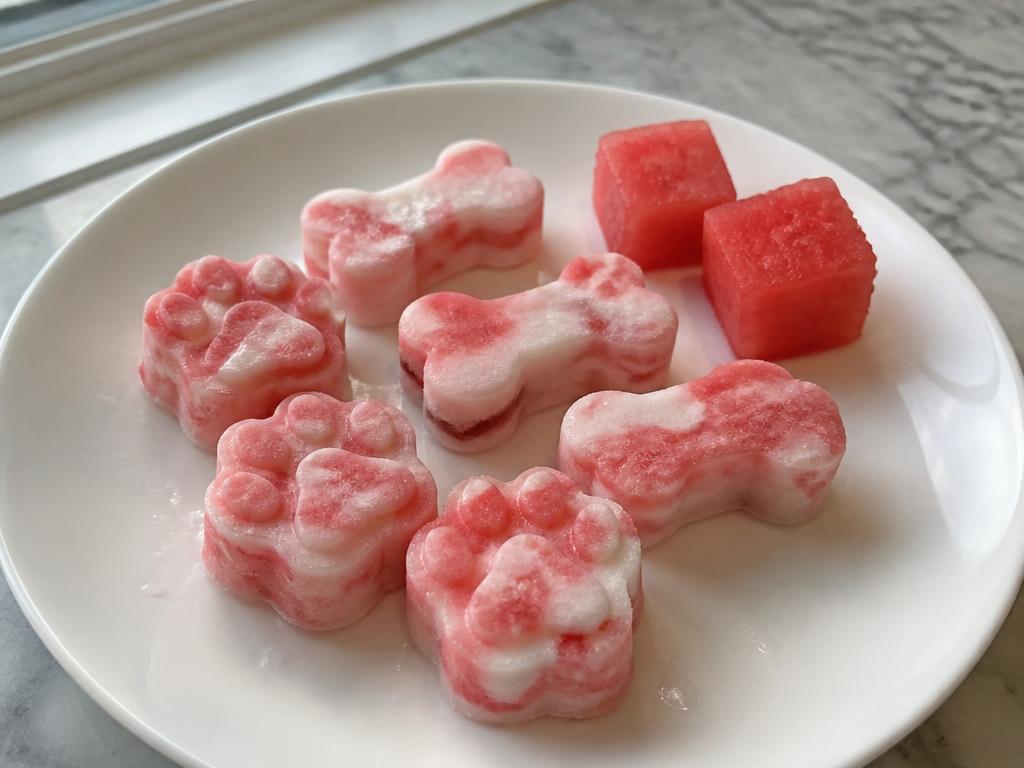
Small frozen pink and white watermelon yogurt dog treats from silicone moulds on a white plate, with two cubes of seedless watermelon flesh
Prep
10 minutes
Cook
None (4 hours freezing)
Total
4 hours 10 minutes
Difficulty
Easy

First time giving this? See how to introduce a new food safely.

Kyo's Kitchen recipe card

Frozen Watermelon Yogurt Bites

Makes About 14 small frozen bites · 4 hours 10 minutes total

Ingredients

  • 2 cups seedless watermelon flesh, rind removed, cut into chunks (pick out any seeds you find)
  • 1/2 cup plain unsweetened yogurt, checked to contain no xylitol and no added sweetener

Instructions

  1. 1Cut the watermelon away from the rind and discard all rind. Remove any seeds, including pale immature ones.
  2. 2Read the yogurt label and confirm it is plain and unsweetened. Any product listing xylitol or other sweeteners is not suitable.
  3. 3Blend the watermelon smooth, then pulse in the yogurt for a marbled mix, or layer them for a two-tone bite.
  4. 4Pour into a small silicone mould or an ice cube tray, filling each cavity only part way so the bites stay small.
  5. 5Freeze at least 4 hours, or overnight, until solid all the way through.
  6. 6Pop the bites out and serve one at a time, straight from the freezer.

Storage

  • Keep them frozen at −18 °C (0 °F) or below in a sealed container or bag, and make small batches so they are used while fresh.
  • Untouched portions that thawed in the fridge and stayed refrigerated can be refrozen, according to USDA guidance — texture may change, especially with yoghurt and fruit purée.
  • Do not refreeze anything that has been above fridge temperature for more than 2 hours, or more than 1 hour above 32 °C (90 °F) — discard it instead.
  • Treats that have already been served, licked or carried around go in the bin, never back into the freezer with the stored batch.
  • Serve outside or on a washable floor, as these melt fast, and label the container so they are not mistaken for a human dessert.

Sources: Refreezing thawed food (USDA FSIS) · Food safety basics (USDA FSIS)

Serving considerations

  • Watermelon is mostly water and sugar, and these are a hot-day extra rather than part of the diet; keep treats a small share of daily intake.
  • Amount depends on your dog's size, weight and normal food, so there is no serving that suits every dog.
  • Some dogs do not digest dairy well, so start with one small bite and see how your dog handles it. Our yogurt guide covers lactose tolerance in more detail.
  • Hard frozen treats should be sized so nothing is gulped whole; supervise while your dog eats and skip them for dogs with dental problems.
  • Check with your own vet first if your dog is on a prescribed diet or has a sensitive stomach.
Ingredient safety notes

This guide is for general educational purposes and isn't a substitute for advice from your veterinarian. If your dog has eaten something potentially toxic or is showing concerning symptoms, contact a veterinarian promptly.

Frequently Asked Questions

Yes. Rind is tough, hard to digest and a real obstruction risk, so use only the soft flesh. Remove any seeds you find as well, including the pale immature ones.

Plain, unsweetened, with no xylitol or other sweeteners and no added flavourings. Read the label every time, because some low-sugar yogurts contain xylitol, which is dangerous to dogs. Our yogurt guide has the detail.

Many adult dogs digest lactose poorly. Start with one small bite and watch for loose stools or gas, or freeze the watermelon puree on its own and skip the yogurt entirely.

Keep the bites small so they are licked and crunched rather than gulped, and skip hard frozen treats for dogs with dental disease or a habit of swallowing things whole. Supervise while your dog eats.

Keep them in a sealed container in the freezer at −18 °C (0 °F) or below, and make small batches so they get used while fresh. Untouched bites thawed in the fridge and kept refrigerated can be refrozen, though texture may change; anything left above fridge temperature for more than 2 hours (1 hour above 32 °C), or already served to your dog, goes in the bin.