The full answer
Cucumber is mostly water, which makes it a light, crunchy snack option that adds very few calories compared with many commercial treats. That is the main reason owners reach for it.
Because it is crunchy and can be sliced into thick rounds, the biggest practical risk is size. A large chunk swallowed whole by an enthusiastic dog can create a choking or obstruction concern, so cutting it into pieces your dog can actually chew matters more than anything else here.
Pickled cucumber is a completely different food. Pickles typically contain substantial salt and often vinegar brine, spices, garlic or onion, so they should not be treated as an equivalent to plain fresh cucumber.
Is Cucumber Good for Dogs?
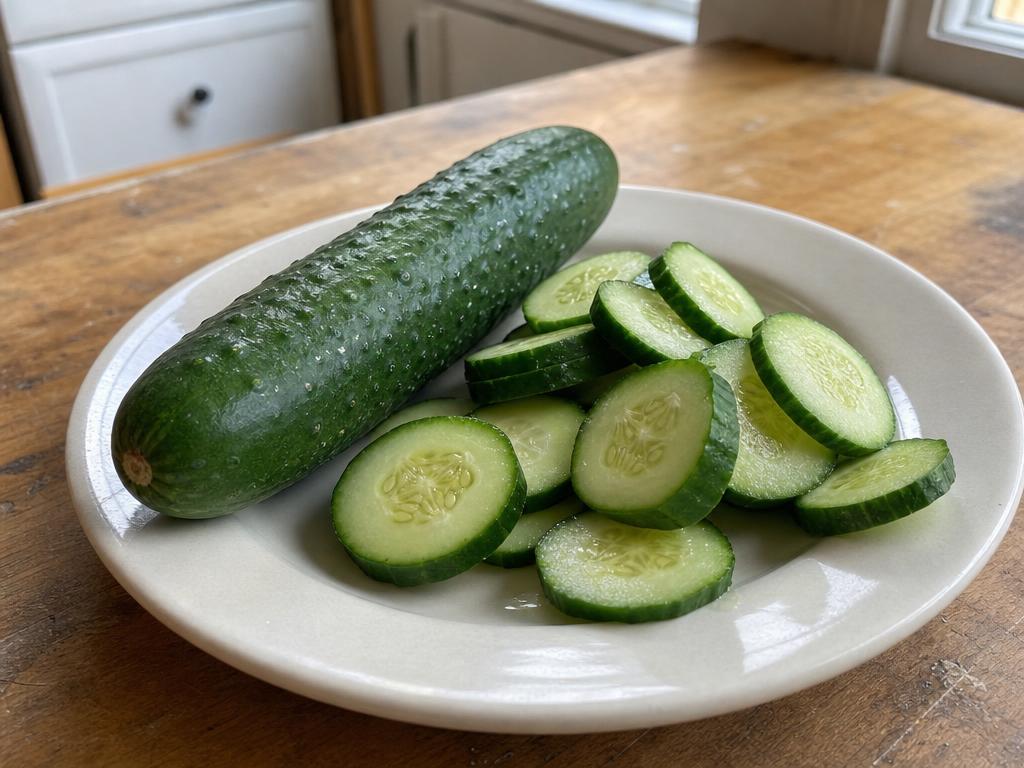
Plain fresh cucumber, washed and cut small
Skin and seeds are generally edible for most dogs
A light snack option when you want something low in calories
Potential benefits
- High water content makes it a refreshing snack
- Relatively low in calories compared with many treats
- Easy to cut into small training-sized pieces
Risks and Things to Know
- Large chunks or thick rounds may create a choking or obstruction risk
- Eating a lot at once can cause gas, loose stools or stomach upset
- Pickles and seasoned cucumber salads are not suitable — salt, spices, garlic and onion are the problem
- Any new food can disagree with an individual dog
How Much Can Dogs Eat?
There is no universal serving size. How much cucumber suits your dog depends on their size, calorie needs, health and overall diet.
As a general principle, treats and extras should stay a small share of daily calories, with a complete balanced diet doing the heavy lifting.
Introduce it gradually — a couple of small pieces is plenty for a first try.
Ask your vet if your dog has a sensitive stomach or a prescribed diet.
How Should I Prepare It?
- Wash the cucumber well before cutting.
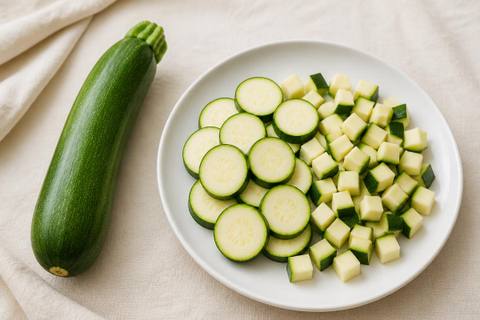
- Cut into small pieces or thin half-moons rather than thick whole rounds.
- Peeling is optional; the skin is generally fine, though peeling can be gentler on sensitive stomachs.
- Serve plain — no salt, dressing, dips or seasoning.
- Supervise while your dog eats, especially with crunchy foods.