The full answer
Celery is mostly water, with fibre and very few calories, which is why it is frequently suggested as a treat for dogs that need to lose weight. It is crunchy, which many dogs enjoy, and it is easy to keep prepared in the fridge.
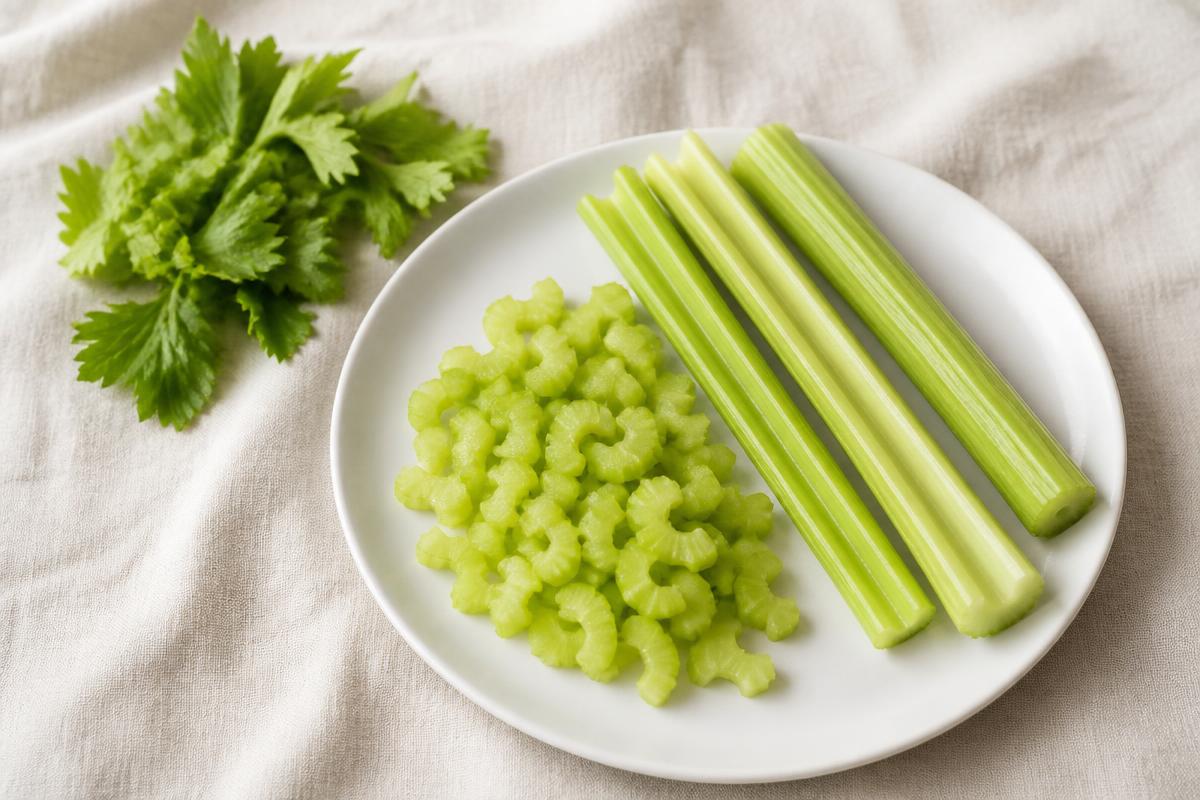
The thing to manage is the texture. Celery has tough longitudinal strings that do not break down easily when a dog gulps rather than chews. A whole stalk handed to an enthusiastic dog can be swallowed in long pieces, which is a choking and obstruction risk. Chopping across the stalk into short pieces solves this.
Celery is also mildly diuretic in the sense that it is very high in water, so some owners notice their dog needing to go out more after a big serving. That is a comfort matter rather than a safety one. Keep it plain — celery served with peanut butter, cream cheese, salt or dips is a different proposition.
Is Celery Good for Dogs?
Fresh celery, washed and chopped into short pieces
Small pieces as a low-calorie training reward
Lightly steamed celery for dogs that struggle with raw crunch
Potential benefits
- Very low in calories — useful for weight-conscious dogs
- High water content and a source of fibre
- Satisfying crunch that many dogs enjoy
Risks and Things to Know
- Long stringy stalks can cause choking or an obstruction if gulped
- Tough fibres can be hard to digest for some dogs
- Large amounts may cause gas or increased urination
- Celery served with dips, salt or spreads adds fat and salt
How Much Can Dogs Eat?
There is no single correct amount of celery for every dog. The right portion depends on your dog's size, calorie needs, health and the rest of their diet. A widely used general principle is that treats — including fruit and vegetables — should stay a small share of daily calories, with the bulk coming from a complete, balanced dog food.
Start with a very small amount the first time and watch how your dog reacts over the following day before offering more. If your dog has a health condition, is overweight, or is on a prescribed diet, check with your vet before adding anything new.
How Should I Prepare It?
- Wash the stalks thoroughly under running water.
- Trim off the base and the leafy tops.
- Chop across the stalk into short pieces suited to your dog's size.
- Serve plain — no salt, butter, dips or spreads.
- Steam lightly if your dog has dental problems or dislikes raw vegetables.