The full answer
The ASPCA lists parsley (Petroselinum crispum, including flat-leaf Italian parsley) as containing furanocoumarins, which can cause photosensitisation — a sunburn-like skin reaction. It notes that large amounts are needed to cause this.
The American Kennel Club describes small amounts of parsley as acceptable for dogs and explains the same skin reaction with large amounts.
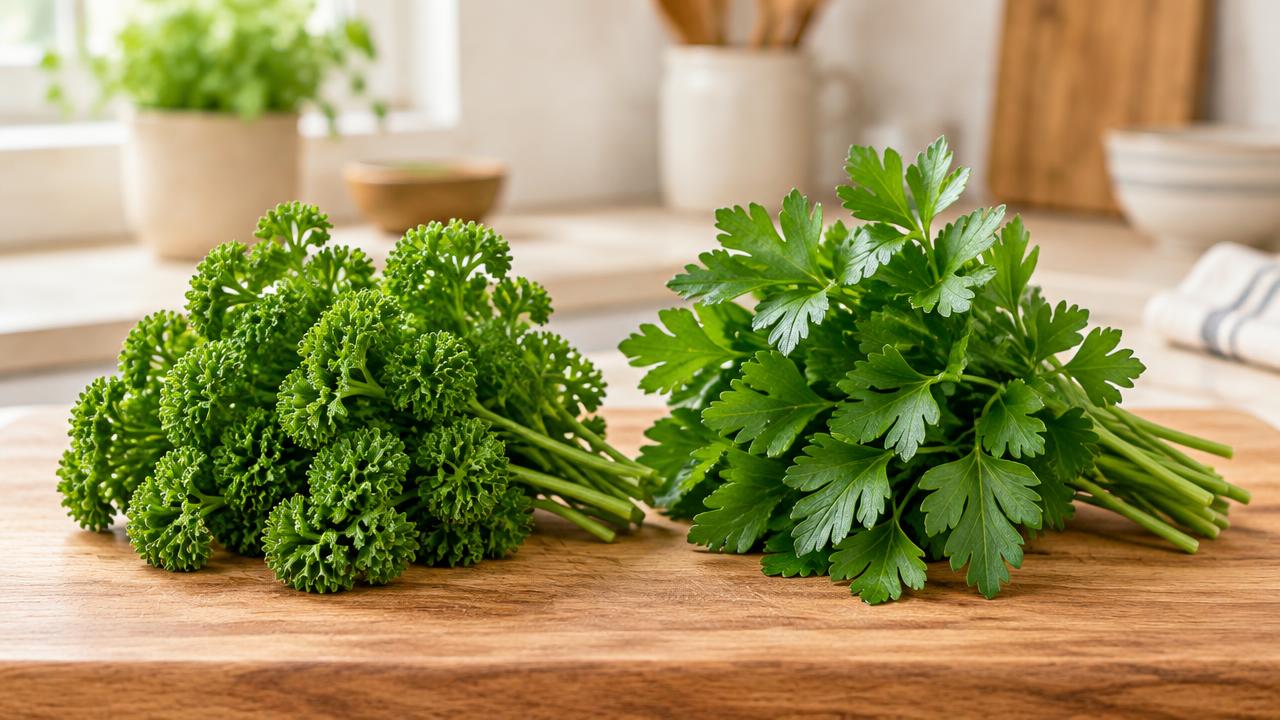
Curly and flat-leaf parsley are forms of Petroselinum crispum, but veterinary guidance is not identical. The ASPCA groups them together, while the American Kennel Club recommends curly parsley as the safer choice and advises more caution with Italian or flat-leaf parsley. For that reason, keep portions small and do not treat either form as a regular food.
Several wild plants are called “parsley” or look similar, including spring parsley, cow parsley and fool's parsley. They are different species, some of them harmful, and this page does not apply to them. Parsley root is also not covered here.
Concentrated parsley supplements, oils and extracts are not assessed on this page.
Risks and Things to Know
- Large amounts can cause a sunburn-like skin reaction.
- Too much can cause stomach upset.
- Wild plants that resemble parsley can be harmful and are not covered by this page.
How Much Can Dogs Eat?
Use parsley only as a small sprinkle on food, not as a regular food.
Stop if you notice skin redness, itching or stomach upset.
Do not change a diet formulated for your dog by a veterinary nutrition professional without their advice.
How Should I Prepare It?
- Wash fresh culinary parsley and chop it finely.
- Add a small pinch to your dog's food; do not use parsley cooked with garlic, onion, oil or salt.
- Do not let your dog graze on wild plants that look like parsley.