The full answer
Veterinary and kennel-club sources describe plain olives as non-toxic to dogs, and a small number can be eaten occasionally.
Most olives people buy are brined, canned or pickled. Those products can be high in sodium, which is why olives should stay a rare, small extra. Our salt page explains why too much salt is a concern for dogs.
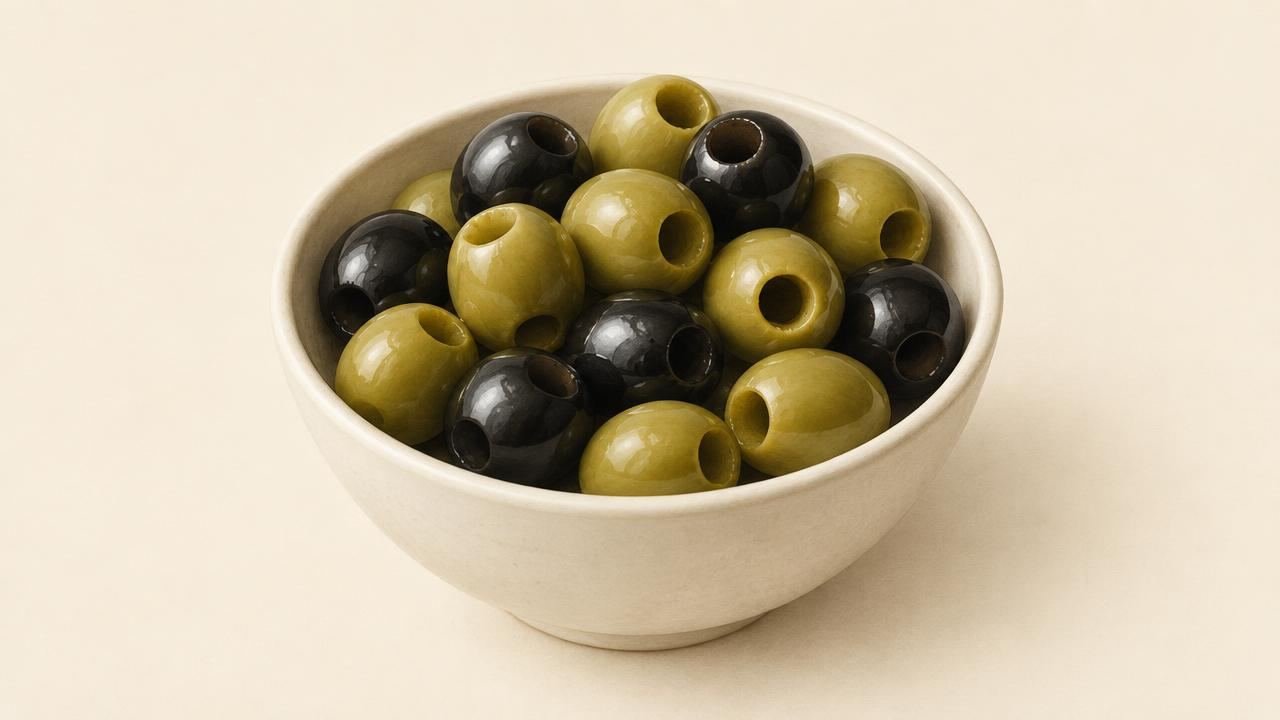
Olive pits are a choking hazard, can cause a blockage in the gut and can damage teeth. Only ever offer pitted olives.
Stuffed and marinated olives can contain ingredients that are not suitable for dogs, such as garlic, blue cheese, chillies or herbs in oil. Olives soaked in alcohol, such as cocktail olives, should never be given to a dog.
Risks and Things to Know
- Brined, canned and pickled olives can be high in salt.
- Pits can cause choking, blockages or damage to teeth.
- Stuffings and marinades may contain garlic, blue cheese or other unsuitable ingredients.
- Alcohol-soaked olives should never be fed.
How Much Can Dogs Eat?
If you share olives at all, keep it to one or two plain, pitted olives, and not often.
Rinsing brined olives removes some surface brine but does not make them low-salt.
Dogs with heart or kidney disease, or on a salt-restricted diet, should not be given olives without veterinary advice.
How Should I Prepare It?
- Use only pitted olives, and check that no pit fragments remain.
- Choose plain olives — no stuffing, marinade, herbs, garlic or oil.
- Cut larger olives into pieces for small dogs.