The full answer
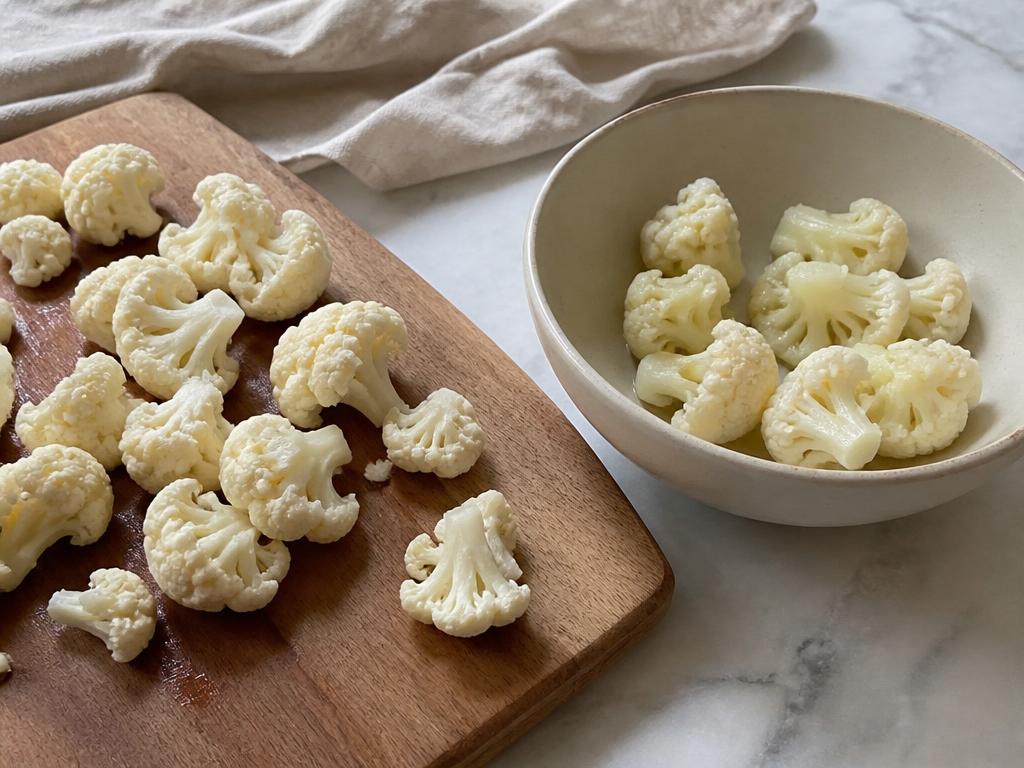
Plain cauliflower is a low-calorie vegetable that dogs can eat. It is not a poison risk, and a few small florets make a perfectly reasonable treat for a dog who likes vegetables. Raw and cooked both work — cooked florets are softer and generally easier on the stomach, raw ones are crunchier and hold a dog's interest for longer.
Cauliflower is a brassica, the same family as broccoli and cabbage, and that family has a reputation for gas. It is deserved. Larger amounts commonly produce wind, a gurgling stomach and looser stools, particularly in dogs who are not used to vegetables. This is discomfort rather than danger, but it is the main reason to keep servings modest.
Almost all the real trouble with cauliflower comes from how people cook it rather than the vegetable itself. Cauliflower cheese, roasted cauliflower with garlic, buttered florets and anything finished with salt or stock are unsuitable — onion and garlic in particular are a genuine concern for dogs, including in powdered form. If cauliflower is on the table as part of a family meal, take a plain floret out before the seasoning goes on.
Firm raw florets are also worth cutting down. A whole floret can be gulped by an enthusiastic dog, and stalk pieces are dense. Small pieces suited to your dog's size solve this.
Is Cauliflower Good for Dogs?
Cauliflower is low in calories and provides fibre and water, which is why plain vegetables often appear in vet-guided weight-management plans as a low-calorie way to bulk out a treat allowance. It is not a food dogs need, and it is not a substitute for any part of a balanced diet. If weight is the reason you are considering it, talk to your vet about the overall plan rather than adding vegetables on your own.
Potential benefits
- Very low in calories, which suits dogs on a treat budget
- Provides fibre and water
- Works raw for crunch or cooked for dogs with softer preferences
Risks and Things to Know
- Gas, bloating and loose stools are common when dogs eat more than a small amount
- Butter, salt, cheese sauce, stock, garlic and onion make prepared cauliflower unsuitable — garlic and onion are a real toxicity concern
- Whole florets and thick stalk pieces can be gulped by dogs who bolt their food
- Dogs with sensitive stomachs or existing digestive disease often tolerate brassicas poorly
How Much Can Dogs Eat?
A few small florets is enough for most dogs, and one small piece is a sensible first try.
There is no universal serving amount — a 4 kg dog and a 40 kg dog experience the same handful very differently. Start smaller than you think, once, and see how your dog's stomach responds.
How Should I Prepare It?
- Wash the cauliflower and cut it into small florets
- Serve raw, or steam or boil it plain until soft
- No butter, oil, salt, cheese sauce, stock, garlic or onion
- Cut pieces to a size your dog will chew rather than swallow whole
- Avoid leftovers from a seasoned family dish, and avoid pickled cauliflower