The full answer
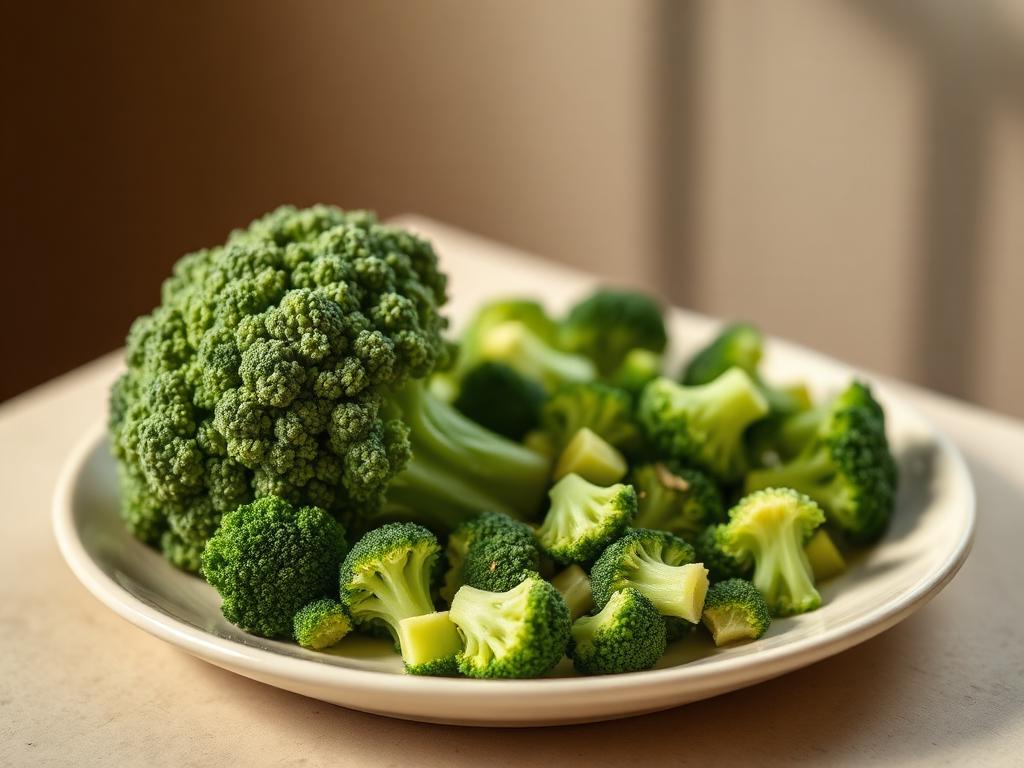
Broccoli is not classified as a toxic food for dogs, and a small amount of plain broccoli is generally considered acceptable. It is a fibrous vegetable that some dogs enjoy raw and others prefer lightly cooked.
The reason we list it as LIMIT rather than SAFE is that quantity and preparation matter more than with something like cucumber. Broccoli florets contain isothiocyanates, compounds that can cause gastric irritation in dogs when eaten in larger amounts. In small portions this is usually not an issue, but it is a real reason to keep servings modest.
The second consideration is physical. Broccoli stalks are tough, and large chunks can be a choking or obstruction concern, particularly for smaller dogs or dogs that swallow quickly. Cutting broccoli into small pieces — and cooking it plainly if that makes it easier to portion — addresses most of this.
How broccoli is served matters too. Butter, oil, salt, cheese sauce, garlic and onion are all common broccoli accompaniments, and none of them belong in a dog's bowl.
Is Broccoli Good for Dogs?
Plain broccoli, raw or plainly cooked, with no seasoning
Small florets and finely chopped stalk pieces
Small portions offered occasionally rather than large helpings
Potential benefits
- Provides fiber and water with relatively few calories
- A plain vegetable option for dogs that enjoy crunchy snacks
- Easy to chop into small, controlled portions
Risks and Things to Know
- Florets contain isothiocyanates, which can cause gastric irritation in larger amounts
- Tough stalks and large pieces can pose a choking or obstruction risk
- Gas, bloating or loose stools are common if a dog eats too much
- Seasoning, butter, oil, cheese sauce, garlic and onion make broccoli unsuitable
- Some dogs simply tolerate cruciferous vegetables poorly
How Much Can Dogs Eat?
There is no universal broccoli portion for dogs — the right amount depends on size, calorie needs, health and overall diet.
Treats and vegetable extras should stay a small share of total daily calories, with a complete balanced diet providing the rest.
Because of the gut-irritation and gas potential, broccoli is best kept to small portions rather than a large helping.
Introduce it gradually and stop if your dog reacts poorly. Ask your vet if you are unsure how much is appropriate.
How Should I Prepare It?
- Wash the broccoli thoroughly.
- Cut florets into small pieces and chop any stalk finely — never serve a large tough chunk.
- If cooking, steam or boil it plainly with no salt, oil, butter or seasoning.
- Let cooked broccoli cool fully before serving.
- Start with a small amount and supervise while your dog eats.