The full answer
Green beans are one of the vegetables most often suggested by vets as a treat for dogs, particularly dogs that need to feel full on fewer calories. They provide fibre, water and a satisfying texture, and most dogs accept them readily either raw or lightly cooked.
The important detail is preparation. Green beans served at a human dinner table are usually cooked with salt, butter, oil, garlic or onion. Garlic and onion are genuinely harmful to dogs, and added fat and salt undermine the point of a low-calorie treat. Plain steamed or raw beans avoid all of that. Canned green beans are usually salted; if you use them, choose no-salt-added varieties and rinse them.
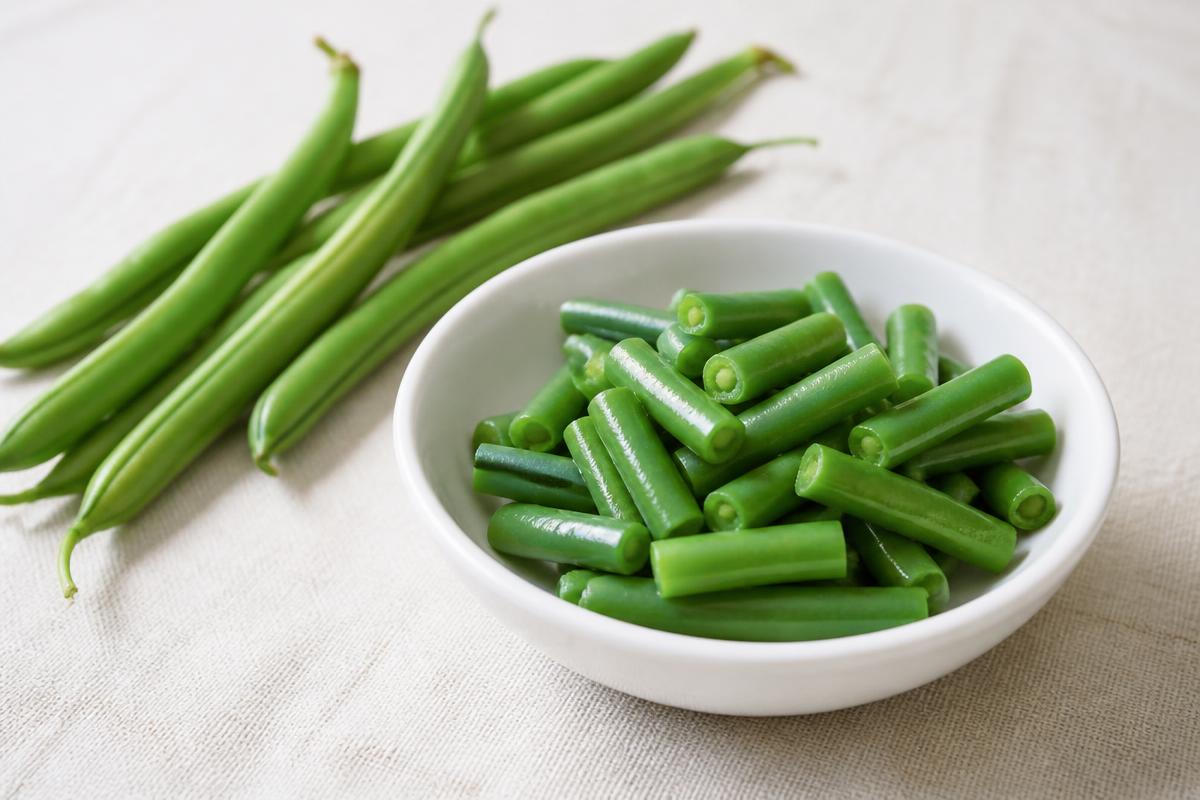
Whole beans are long, so chopping them into short pieces is sensible for small dogs and gulpers. Some owners use green beans as a portion of a weight-loss plan — that should be done with a vet, not improvised, because replacing a meaningful part of a meal with vegetables can unbalance the diet.
Are Green Beans Good for Dogs?
Fresh raw green beans, washed, trimmed and chopped
Plainly steamed or boiled green beans with nothing added
Frozen plain green beans, thawed or offered as a cool crunchy treat
No-salt-added canned green beans, rinsed
Potential benefits
- Low in calories and filling — helpful for weight-conscious dogs
- Good source of fibre and water
- Widely accepted by dogs, raw or cooked
- Easy to prepare and store
Risks and Things to Know
- Beans cooked with garlic, onion, butter, oil or salt are not safe or suitable
- Standard canned green beans are high in sodium
- Whole beans can be a choking risk for small dogs if gulped
- Too many at once can cause gas or loose stools
- Using beans to replace part of a meal can unbalance the diet unless a vet is guiding it
How Much Can Dogs Eat?
There is no single correct amount of green beans for every dog. The right portion depends on your dog's size, calorie needs, health and the rest of their diet. A widely used general principle is that treats — including fruit and vegetables — should stay a small share of daily calories, with the bulk coming from a complete, balanced dog food.
Start with a very small amount the first time and watch how your dog reacts over the following day before offering more. If your dog has a health condition, is overweight, or is on a prescribed diet, check with your vet before adding anything new.
How Should I Prepare It?
- Wash the beans and trim the ends.
- Chop them into short pieces suited to your dog's size.
- Serve raw, or steam or boil them plainly with no salt, oil or seasoning.
- If using canned beans, choose a no-salt-added product and rinse them well.
- Never serve beans cooked with garlic or onion.