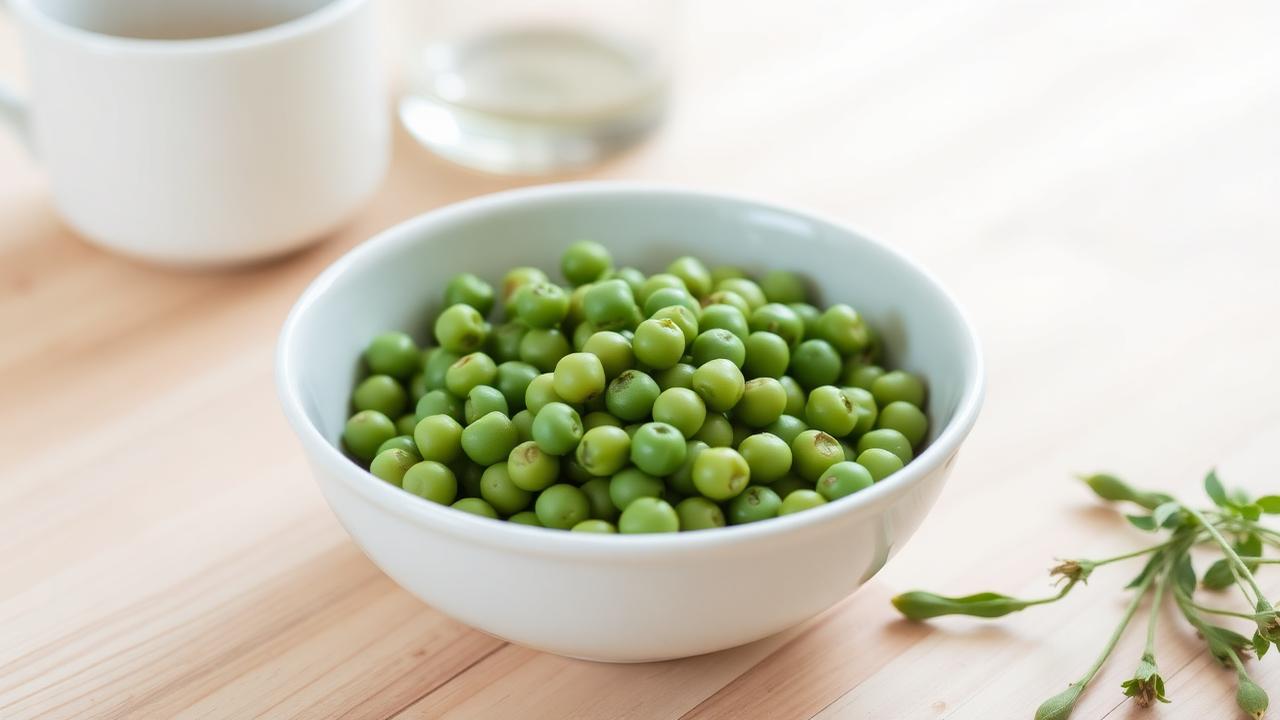
The full answer
Peas are one of the more straightforward vegetables to share. Garden peas, snap peas and snow peas are all non-toxic to dogs, and plenty of dogs enjoy them straight from the freezer as a cold, crunchy nibble.
They are genuinely low in calories for their bulk and provide fibre, some protein and a range of vitamins and minerals, which makes them a useful filler for dogs that always want a little more in the bowl.
The practical caveats are small. Tinned peas are often packed with added salt, so a no-added-salt version, drained and rinsed, is a better choice. Pods on snap and snow peas are edible but can be stringy, and a whole pod is easier for a small dog to gulp than to chew — cutting them up solves that.
Very large quantities of any vegetable can cause wind or loose stools, and peas are no exception. A small addition to a meal is the sensible approach.
Peas also appear widely in commercial dog food, particularly in grain-free recipes. There has been an ongoing investigation into a possible link between some of those diets and heart disease in dogs, and that work has not established that peas cause it. If you feed a grain-free diet and are unsure, that is a good question for your vet, rather than a reason to stop sharing a spoonful of peas at dinner.
Are Peas Good for Dogs?
Yes, in the ordinary sense that they are a safe, low-calorie vegetable that most dogs digest well.
They work nicely as a bulking agent for dogs on a weight-management plan, adding volume to a meal without many calories — worth agreeing with your vet if your dog is on a formal diet.
Frozen peas also make a cheap, low-fuss training treat or hot-weather nibble for dogs that like them.
Potential benefits
- Low in calories and a good source of fibre, which can help a hungry dog feel fuller.
- Provide plant protein along with vitamins and minerals such as vitamin K, B vitamins, potassium and iron.
- Easy to serve: fresh, frozen or plain tinned, with no cooking required for frozen peas.
Risks and Things to Know
- Tinned peas are frequently high in added salt unless you buy a no-added-salt version.
- Large amounts can cause wind or loose stools.
- Whole snap and snow pea pods can be stringy and are easier for small dogs to swallow whole than to chew.
- Peas cooked with butter, salt, mint, onion or garlic are not suitable — cook your dog's portion plain.
- Dogs with kidney disease may need to limit certain foods, so check with your vet before adding peas regularly.
How Much Can Dogs Eat?
A teaspoon to a tablespoon for a small dog, and a couple of tablespoons for a large dog, is a sensible addition to a meal.
Peas can be a regular small extra rather than a rare one, but they should still sit within the modest share of the day given over to treats and additions.
Start small if your dog has a sensitive stomach, and build up only if things stay settled.
If your vet has your dog on a prescribed diet, check before adding vegetables.
How Should I Prepare It?
- Use fresh, frozen or no-added-salt tinned peas. Drain and rinse tinned peas before serving.
- Serve them plain: no butter, salt, mint, onion, garlic or sauce.
- Frozen peas can be given straight from the freezer as a cold treat, or thawed for dogs that prefer them soft.
- Chop snap and snow peas into short pieces, particularly for small dogs, and remove any tough strings.
- Steam or boil fresh peas briefly in plain water if your dog prefers them softer, then let them cool.
- Mix them into the usual meal rather than serving a bowl of peas on their own.