The full answer
This is a deliberately conservative Kyo's Kitchen classification, and it is worth being precise about why. Cherry flesh itself is not generally described as toxic to dogs, and a dog who eats a small piece of pitted cherry flesh is not usually in danger. The problem is everything else that comes with a cherry.
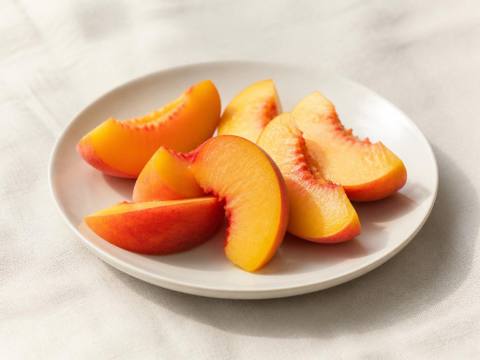
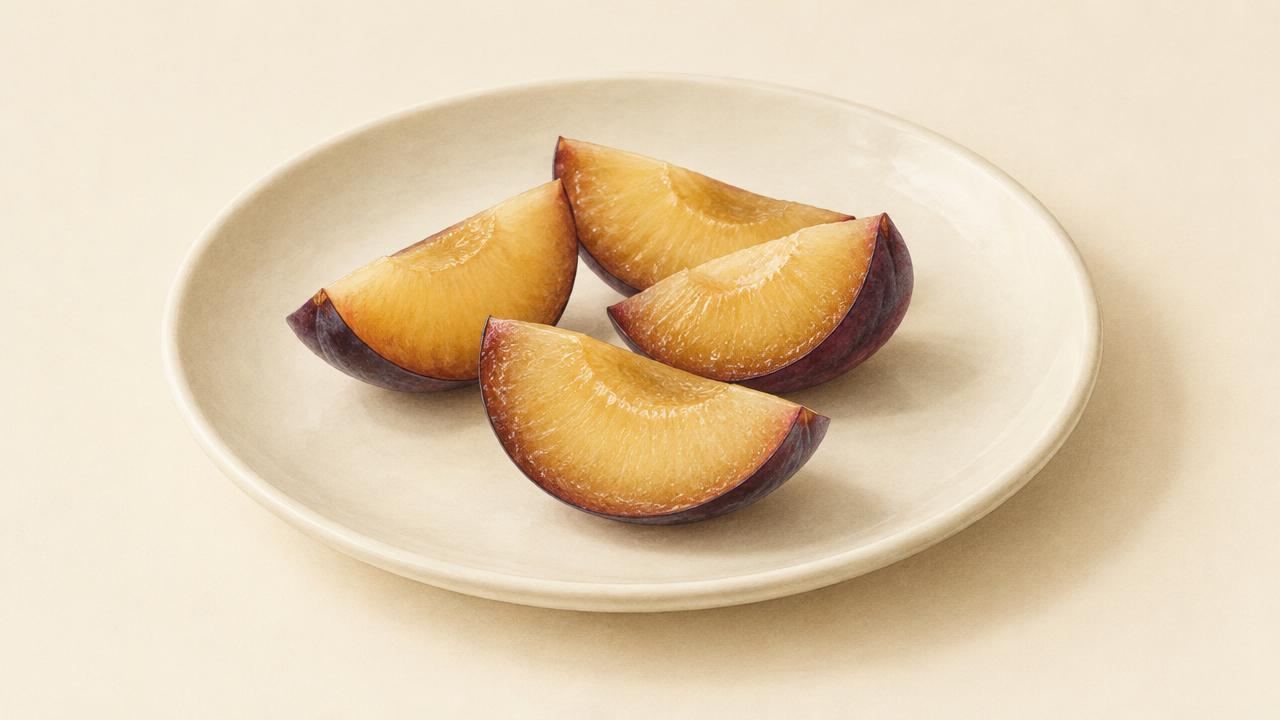
You may notice we rate cherries AVOID rather than LIMIT, as we do for peaches and plums. The difference is not that cherry flesh is more toxic — it is how cherries are eaten. They are small fruits, so a dog is often offered, or steals, several whole cherries with pits and stems still attached. The flesh itself is not the main concern, but that makes accidentally swallowing a pit or stem more likely than with larger stone fruits such as peaches or plums, which are usually cut up with the stone removed first. Veterinary sources also draw the line in different places: PetMD considers pitted cherry flesh acceptable in small amounts, while the AKC recommends skipping cherries entirely. Where good sources disagree, we take the more cautious reading.
Cherry pits, stems and leaves contain cyanogenic compounds, which is the same reason peach and apricot pits and apple seeds are kept away from dogs. A single swallowed pit is unlikely to cause cyanide poisoning, but crushed or chewed pits are the scenario veterinary sources warn about, and dogs are not careful eaters.
The more common problem is mechanical. A cherry pit is a smooth, hard object of exactly the wrong size — it can lodge in the airway of a small dog or cause an intestinal obstruction, which is a surgical emergency. Whole cherries also come with stems that are easy to swallow along with the fruit.
Prepared cherry products are worse, not better. Maraschino cherries are packed in heavy syrup and offer a lot of sugar with no benefit. Dried cherries are concentrated in sugar, canned cherries are usually sweetened, and cherry pie or cherry yoghurt brings sugar, fat and sometimes artificial sweeteners such as xylitol, which is toxic to dogs.
Because there is nothing in a cherry that your dog cannot get more safely from blueberries, raspberries, watermelon or a piece of apple with the core removed, our recommendation is simply to skip cherries. If your dog does eat a cherry, the flesh is not the worry — the pit and any stems are. Contact your vet for advice, particularly for a small dog or if several were eaten, and watch for vomiting, appetite loss, straining, or signs of abdominal pain.
Are Cherries Good for Dogs?
Nothing, ideally — Kyo's Kitchen recommends choosing a different fruit
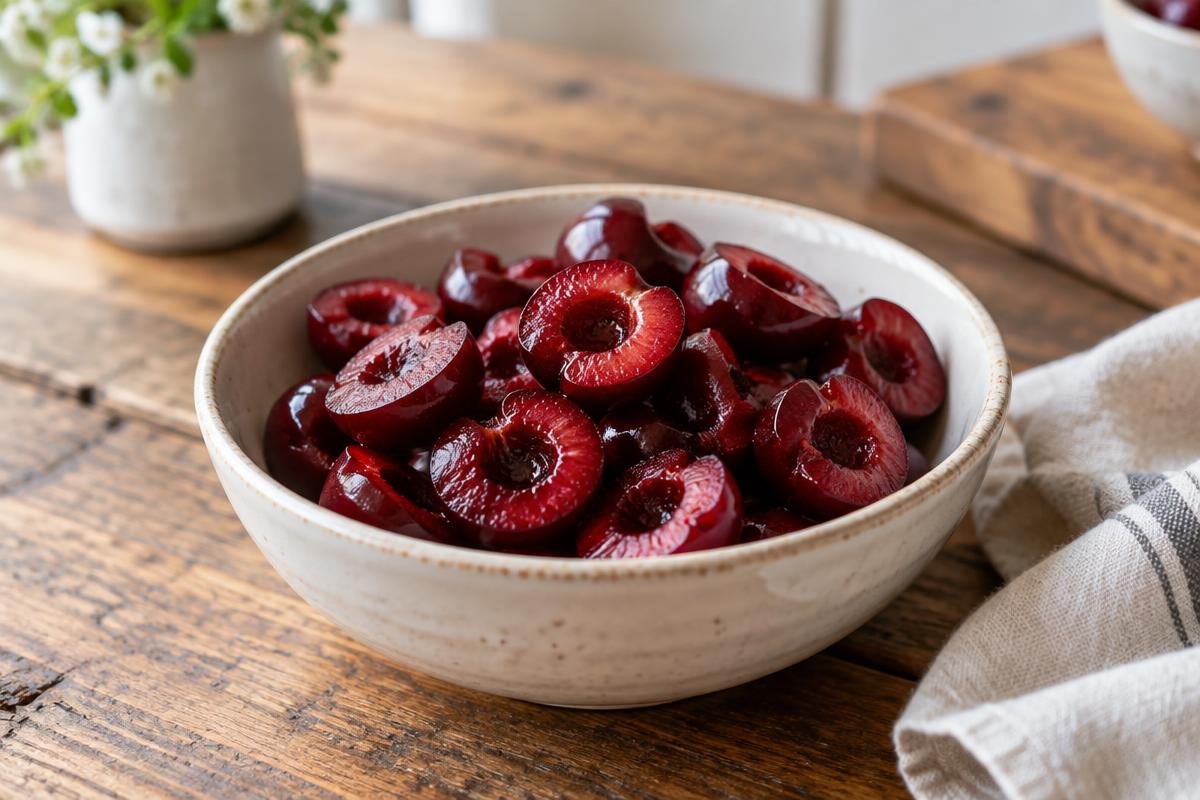
If a cherry has already been shared, plain fresh flesh with the pit and stem fully removed is the least concerning form
Safer alternatives include blueberries, raspberries, strawberries and watermelon flesh
Potential benefits
- Cherry flesh contains vitamins and antioxidants, but nothing a dog cannot get from a pit-free fruit
Risks and Things to Know
- Pits are a genuine choking and intestinal obstruction hazard
- Pits, stems and leaves contain cyanogenic compounds
- Whole cherries are easy for a dog to swallow stem, pit and all
- Maraschino, canned and dried cherries are high in sugar
- Cherry desserts and yoghurts may contain xylitol, which is toxic to dogs
- Excess fruit sugar can cause digestive upset
How Much Can Dogs Eat?
There is no recommended serving, because Kyo's Kitchen suggests avoiding cherries altogether. If you want a fruit treat, use a pit-free option and keep it within the small share of daily calories that treats should occupy. Never leave a bowl of whole cherries where your dog can reach it, and be careful with cherry stones dropped in the garden or on a walk.
How Should I Prepare It?
- Our recommendation is not to prepare cherries for your dog.
- If a cherry is shared anyway, remove the stem and the pit completely and offer only a small piece of flesh.
- Never give whole cherries, and never let your dog chew a pit.
- Avoid maraschino, canned, dried and sweetened cherry products entirely.
- Choose blueberries, raspberries or watermelon flesh instead.