Can Dogs Eat Plums?

LIMIT

LIMIT — a little ripe plum flesh with the pit removed is acceptable for most healthy dogs, but the pit, stems and leaves are not.

The fleshy part of a ripe plum is not the problem. The pit (stone), stems and leaves contain compounds that can release cyanide, and a swallowed pit is also a choking and blockage risk. Too much plum flesh can upset the stomach, and prunes are a more concentrated form of the fruit.

If your dog swallowed a plum pit, or chewed pits, stems or leaves, contact a veterinarian or an animal poison service for advice, even if your dog seems fine. A swallowed pit can cause a blockage, and these plant parts contain cyanide-forming compounds. Do not induce vomiting on your own initiative. A few pieces of ripe plum flesh without the pit are a different situation: watch for stomach upset and call your vet if anything changes.

See our guide to fruits dogs can and can't eat to compare this with the rest of the fruit list.

On this page
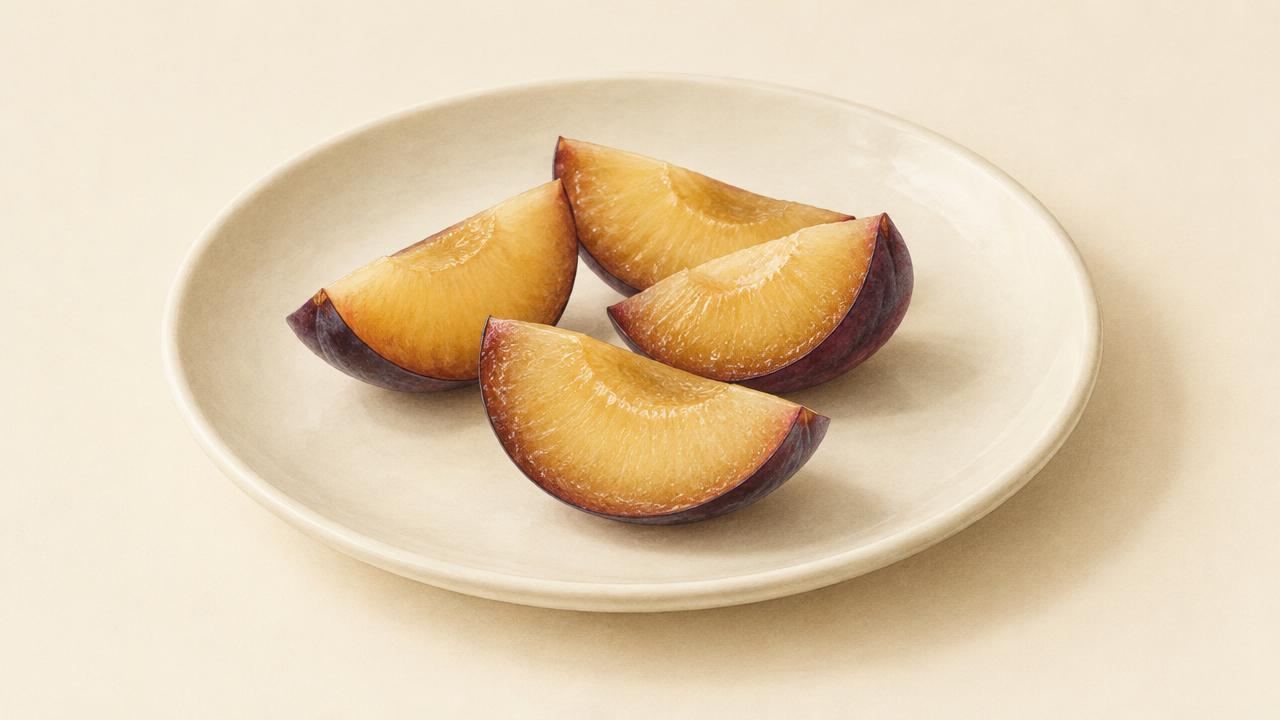
A few slices of ripe plum flesh, with no pits, on a cream plate

Quick answer

Category
Fruit
Recommended preparation
Ripe flesh only, pit, stem and leaves removed, cut small
Main concern
The pit (choking, blockage, cyanide-forming compounds)
Suitable as everyday food
No

The full answer

Veterinary sources describe ripe plum flesh, without the pit, as something dogs can eat in moderation. Too much can cause digestive upset.

The pit, stems and leaves are the concern. The ASPCA lists the plum plant as toxic to dogs because these parts contain cyanogenic glycosides, which can release cyanide. This warning is about those plant parts, not about ripe plum flesh.

A whole pit is also a physical risk: it can cause choking or get stuck in the gut.

Prunes are dried plums. They contain much more concentrated sugar and fibre than fresh plums, which makes stomach upset more likely.

Risks and Things to Know

  • The pit can cause choking or a blockage in the gut.
  • The pit, stems and leaves contain cyanide-forming compounds.
  • Too much plum flesh may cause digestive upset.
  • Prunes are concentrated in sugar and fibre.

How Much Can Dogs Eat?

Offer only a few small pieces of ripe flesh as an occasional extra.

Do not leave whole plums or fallen fruit where your dog can reach them.

Do not change a diet formulated for your dog by a veterinary nutrition professional without their advice.

How Should I Prepare It?

  • Wash the plum and remove the pit, stem and any leaves.
  • Cut the ripe flesh into small pieces.
  • Do not offer plum jam, plum sauce or baked goods — those are different products.
What If My Dog Ate Too Much?

If your dog ate a few pieces of plum flesh without the pit and is acting normally, watch for stomach upset.

Contact a vet if your dog swallowed a pit or chewed pits, stems or leaves, or if vomiting, diarrhoea, gagging, straining or belly pain develops.

This guide is for general educational purposes and isn't a substitute for advice from your veterinarian. If your dog has eaten something potentially toxic or is showing concerning symptoms, contact a veterinarian promptly.

Frequently Asked Questions

Yes, in moderation. A few small pieces of ripe plum flesh, with the pit removed, are acceptable for most healthy dogs.

The ripe flesh is not the problem. The pit, stems and leaves contain cyanide-forming compounds, which is why the plum plant is listed as toxic to dogs.

Plum pits contain cyanide-forming compounds and can also cause choking or a blockage. Never give a dog a plum pit.

Contact a veterinarian or an animal poison service for advice, even if your dog seems fine. Do not try to make your dog vomit on your own initiative.

It is better not to. Prunes are dried plums with much more concentrated sugar and fibre, and they are more likely to upset the stomach.

These are different products with added sugar and other ingredients, so this page does not cover them. Check the ingredients for xylitol, raisins or alcohol.

How this guide was written

Last updated 29 September 2026. We write from widely published, mainstream pet-health sources and avoid presenting feeding amounts as veterinary prescriptions.

Browse every food in our A–Z guide