The full answer
Kiwi is not on the veterinary lists of foods that poison dogs, and a couple of small pieces of ripe, peeled flesh is a reasonable occasional treat for a dog who likes fruit. It is not a food dogs need, and it is not a superfood for them either — it is simply a sweet, fibrous fruit that most dogs tolerate in small amounts.
The practical issues are about size and preparation rather than toxicity. A whole kiwi is roughly the shape and size of an object that can lodge in a dog's throat, particularly for a medium or small dog who swallows things whole. Cutting the fruit into pieces removes that concern almost entirely.
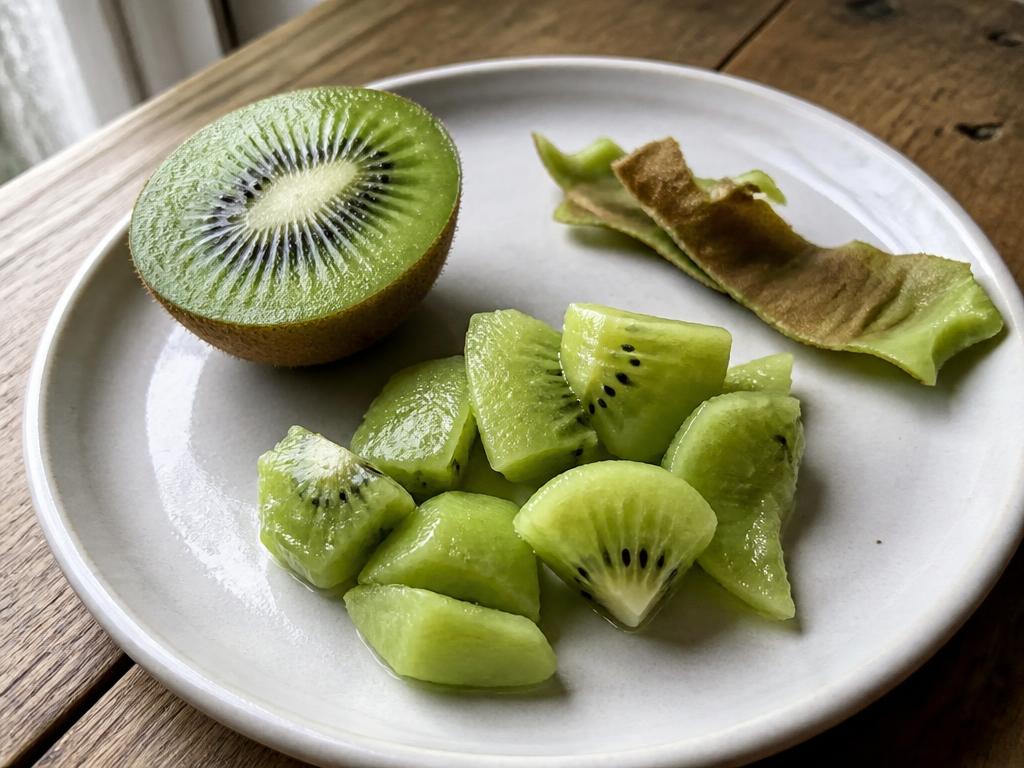
The skin is the next question. It is not poisonous, but it is tough and fibrous, and dogs are less well equipped than we are to break it down. For a small dog especially, a piece of unpeeled kiwi is more likely to cause gagging or an unhappy stomach than peeled flesh. Our practical recommendation is to peel it — it takes a moment and removes the argument.
The tiny black seeds in the flesh are a different thing entirely from stone-fruit pits. They are small, soft and not a cyanide concern, and there is no need to try to pick them out. The realistic risk from kiwi is simply eating too much of it: fruit sugar and fibre in quantity can lead to a loose, uncomfortable day.
Is Kiwi Good for Dogs?
Kiwi supplies water, fibre and vitamin C, and it is low enough in calories to work as a light treat. That said, dogs make their own vitamin C, and a dog on a complete diet is not missing anything that kiwi provides. We would not make health claims for it. Think of kiwi as a pleasant, harmless treat for a fruit-loving dog rather than something that improves your dog's health.
Potential benefits
- High water content and low calorie density, which suits a light treat
- Provides fibre and vitamin C, though dogs are not reliant on dietary vitamin C
- A soft option for dogs who dislike crunchy treats
Risks and Things to Know
- A whole kiwi is a genuine choking and obstruction hazard, especially for small and medium dogs
- The skin is tough and fibrous and harder for a dog to digest than the flesh
- The natural sugar and fibre can cause loose stools or stomach upset if a dog eats a lot
- Not suitable as a regular food for diabetic dogs or dogs on strict calorie control without veterinary advice
- Kiwi in fruit salads, yoghurts or desserts may come with sweeteners, including xylitol, which is a serious concern
How Much Can Dogs Eat?
A few small pieces is plenty for most dogs, and less for a small one. Fruit is a treat, and treats are best kept to a small share of the day's calories.
Introduce it once, on its own, and see how your dog's stomach handles it before offering it again. Some dogs are noticeably more sensitive to fruit than others.
Dogs with diabetes, a sensitive stomach or a history of pancreatitis should not be given new fruit without checking with your vet first.
How Should I Prepare It?
- Wash the fruit, then peel it fully
- Cut the flesh into small, bite-sized pieces suited to your dog
- Serve plain — no sugar, syrup, yoghurt or cream
- Never offer a whole or halved kiwi for a dog to work on
- Avoid dried kiwi and kiwi in fruit snacks, which are concentrated in sugar and may contain sweeteners
- Check any yoghurt or dessert for xylitol before letting a dog near it