Can Dogs Eat Nutmeg?

AVOID

AVOID — do not give your dog nutmeg or food you have spiced with it. A large amount of plain nutmeg is a more serious situation.

Nutmeg contains a toxin called myristicin. A recipe amount is very unlikely to cause serious toxicity, though mild stomach upset could occur; a very large amount is a different matter.

We recommend not giving nutmeg or nutmeg-spiced food deliberately. Work out which form and roughly how much. If your dog has got into plain ground nutmeg, whole seeds or nutmeg essential oil — or if you cannot tell how much was eaten — contact a veterinarian or an out-of-hours emergency vet for advice. Do the same if your dog shows vomiting, diarrhoea, disorientation, a raised heart rate, a dry mouth, abdominal pain or seizures, at any amount. If a healthy, symptom-free dog licked a little nutmeg-spiced food, you have read the ingredients and there is nothing else of concern in it, keeping water available and watching is usually reasonable; if the food also contained chocolate, raisins or xylitol, phone a vet without waiting for symptoms. Do not induce vomiting on your own initiative.

On this page
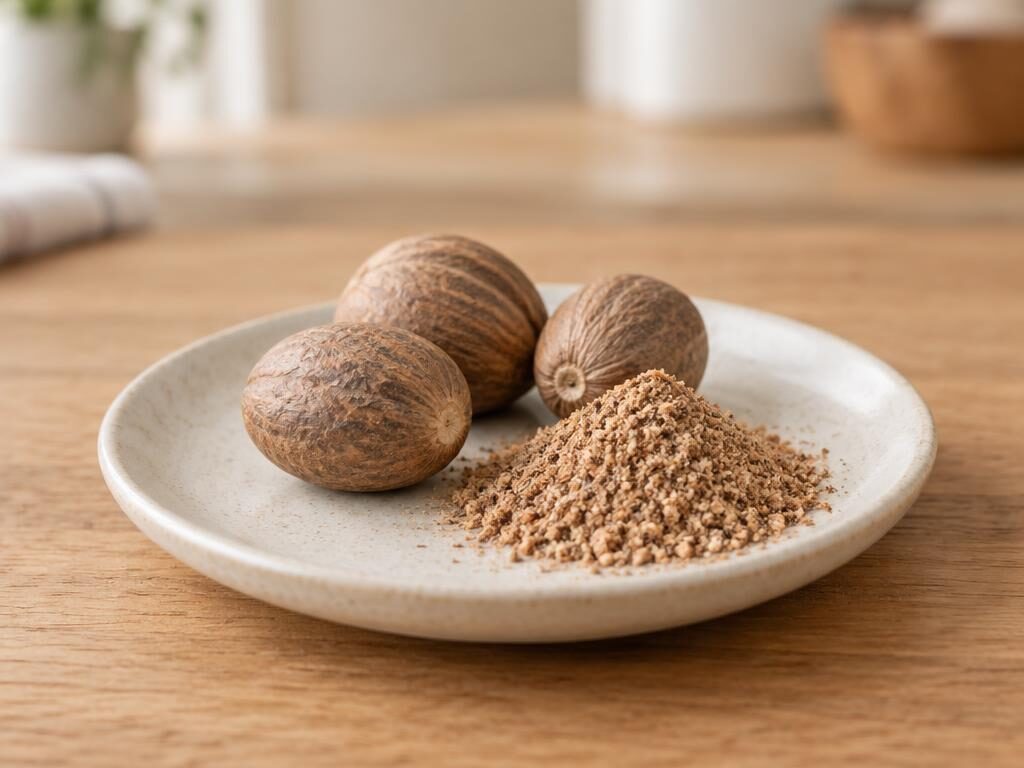
Whole nutmeg with a little ground nutmeg on a ceramic plate

Quick answer

Category
Herbs
Recommended preparation
Not recommended — leave nutmeg out of anything the dog eats
Main concern
Myristicin; large amounts of plain nutmeg
Suitable as everyday food
No

The full answer

Do not give your dog nutmeg or food you have spiced with it. Pet Poison Helpline's veterinarians write that the small amount used in recipes is very unlikely to cause serious toxicity, though mild stomach upset could occur, while a very large amount can cause hallucinations, disorientation, a raised heart rate, high blood pressure, dry mouth, abdominal pain and possibly seizures, with signs lasting up to 48 hours.

So this is not a page telling you a Christmas cookie crumb is an emergency — it is a page telling you nutmeg has no place in what you feed your dog on purpose.

Is Nutmeg Good for Dogs?

Ground nutmeg is the form in most kitchens and the form most likely to be spilled or licked. Whole seeds are a hard seed of Myristica fragrans — a chewable object as well as a spice.

Nutmeg-spiced baked food usually contains a small proportion of spice; a pet would need to ingest a very large amount of nutmeg, and that is very unlikely if a dog eats food containing nutmeg. The baked food may still upset the stomach, and it usually brings other problems with it.

Nutmeg essential oil is a concentrated product. We have no dog-specific dose source for it, so we do not estimate a threshold: store it out of reach and call a vet if your dog gets into it.

Risks and Things to Know

  • In real life, the nutmeg is rarely the biggest problem. A dog that raids autumn baking has usually not eaten plain nutmeg — it has eaten a cake, which may also contain chocolate, raisins, xylitol or a lot of fat and sugar. The ASPCA's autumn-baking guidance covers nutmeg alongside cinnamon, garlic and onion, salt, cannabis and xylitol for exactly this reason. When you phone a vet about “my dog ate a spice cake”, the ingredient list is the useful thing to have in your hand — not the nutmeg alone.
  • Do not assume a spice mix contains nutmeg. Gingerbread spice, pumpkin-spice blends and Christmas baking mixes vary between brands and countries. Some contain nutmeg; some do not. Read the label, and tell the vet what the label says.
  • Reported signs of nutmeg poisoning include vomiting, diarrhoea, reduced appetite, disorientation, hallucinations, raised heart rate, high blood pressure, dry mouth, abdominal pain, raised body temperature and seizures, and can last up to 48 hours. The ASPCA similarly describes vomiting, dry mouth, agitation, pupil changes, fast heart rate, difficulty walking or standing and hallucinations after large ingestions.

How Much Can Dogs Eat?

We do not publish a threshold. PetMD's veterinary author gives figures for ground nutmeg and whole seeds; dose judgements for your dog belong to a vet or poison line with the actual amount in front of them.

How Should I Prepare It?

  • Leave nutmeg out of anything you make for the dog, and do not share nutmeg-spiced baking.
  • Keep the jar, whole seeds and any nutmeg essential oil out of reach.
  • Read the label of a spice blend rather than assuming whether it contains nutmeg.

What If My Dog Ate Too Much?

Work out which form and roughly how much. If your dog has got into plain ground nutmeg, whole seeds or nutmeg essential oil — or if you cannot tell how much was eaten — contact a vet or an out-of-hours emergency vet for advice; toxicity is described as more likely with plain nutmeg than with foods containing it.

Do the same if your dog shows any of the signs above, at any amount. If a healthy, symptom-free dog licked a little nutmeg-spiced food and you have read the ingredients and there is nothing else of concern in it, keeping water available and watching is usually reasonable — mild stomach upset is the described outcome of a small amount — and call if anything changes. Do not induce vomiting on your own initiative.

This guide is for general educational purposes and isn't a substitute for advice from your veterinarian. If your dog has eaten something potentially toxic or is showing concerning symptoms, contact a veterinarian promptly.

Frequently Asked Questions

It contains myristicin, and a very large amount can cause serious signs. A recipe amount is very unlikely to cause serious toxicity, though mild stomach upset is possible. We still recommend not feeding it.

Usually not the main one. Check the rest of the ingredients — chocolate, raisins and xylitol are the ones that change the answer.

We do not publish a threshold. PetMD's veterinary author gives figures for ground nutmeg and whole seeds; dose judgements for your dog belong to a vet or poison line with the actual amount in front of them.

It depends on the product. Read the label rather than assuming.

Treat it as a concentrated product to keep away from your dog, and call a vet if it is ingested. We have no dog-specific dose source to reason from.

How this guide was written

Last updated 18 September 2026. We write from widely published, mainstream pet-health sources and avoid presenting feeding amounts as veterinary prescriptions.

Browse every food in our A–Z guide