The full answer
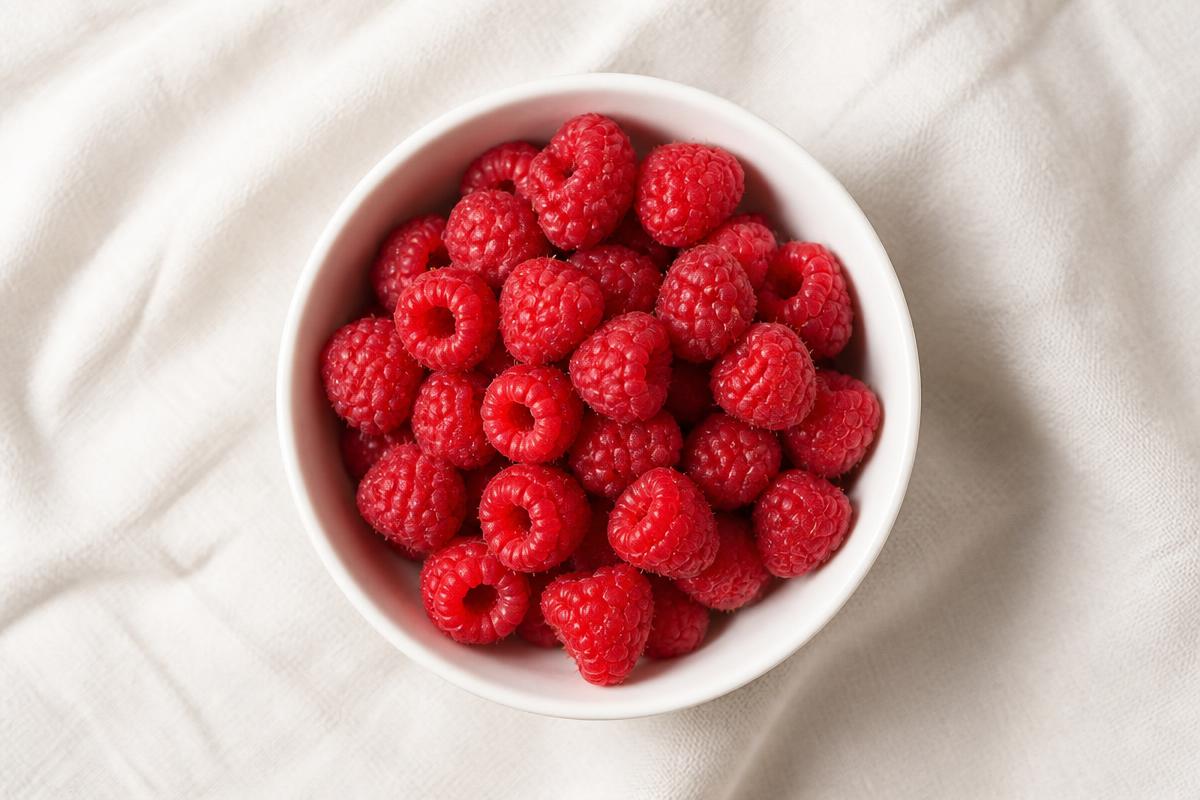
Raspberries are one of the berries most commonly described as suitable for dogs. They are mostly water and fibre, comparatively low in sugar, and soft enough that most dogs can eat them without any preparation beyond a rinse.
The point that comes up most often with raspberries is xylitol. Raspberries contain a naturally occurring trace amount of it — far less than the sweetener used in sugar-free products, which is genuinely dangerous to dogs. The practical takeaway is not that raspberries are unsafe, but that they are a small-portion treat rather than something to feed in large quantities.
The other consideration is fibre. Raspberries are fibrous, and a dog that eats a lot at once may end up with loose stools. As with any fruit, plain and fresh is the right form: raspberry jam, syrups, sweetened yoghurt and baked goods can carry a lot of added sugar and sometimes added xylitol.
Are Raspberries Good for Dogs?
Plain fresh raspberries, rinsed under running water
A few berries as a training reward or topper
Plain frozen raspberries as an occasional warm-weather treat
Potential benefits
- Low in sugar relative to many other fruits
- Provides fibre and water
- Soft and easy to portion into very small pieces
Risks and Things to Know
- Contains a trace amount of naturally occurring xylitol, so large quantities are not advisable
- High fibre content can cause loose stools if overfed
- Sweetened raspberry products may contain added sugar or added xylitol
- Any new food can upset an individual dog's stomach
How Much Can Dogs Eat?
There is no single correct amount of raspberries for every dog. The right portion depends on your dog's size, calorie needs, health and the rest of their diet. A widely used general principle is that treats — including fruit and vegetables — should stay a small share of daily calories, with the bulk coming from a complete, balanced dog food.
Start with a very small amount the first time and watch how your dog reacts over the following day before offering more. If your dog has a health condition, is overweight, or is on a prescribed diet, check with your vet before adding anything new.
How Should I Prepare It?
- Rinse the berries thoroughly under running water.
- Serve them whole for medium and large dogs, or halved for small dogs and fast eaters.
- Offer them plain — no sugar, cream, chocolate or syrup.
- Keep the serving small rather than offering a full punnet.