The full answer
Plain apple flesh is widely considered suitable for most healthy dogs as an occasional treat, provided it is prepared properly. The parts to leave out are the stem, the tough core and the seeds.
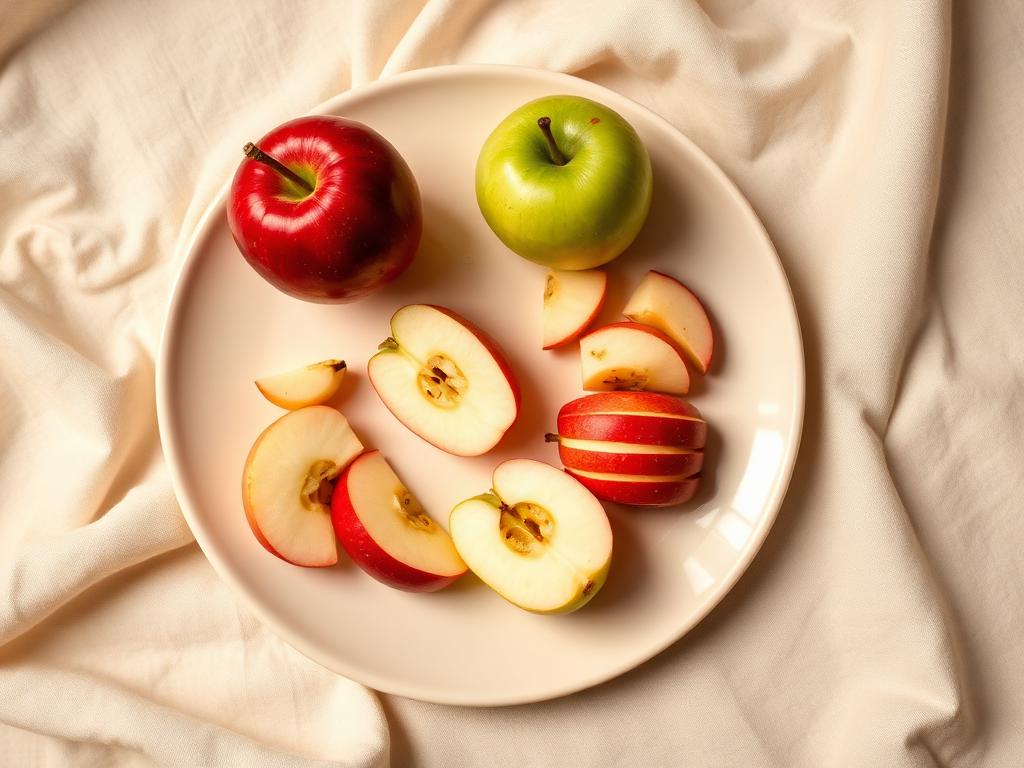
Apple skin is edible for most dogs once the apple has been washed, so peeling is optional. Green apples are no different from red ones here — the same preparation applies to every variety.
Apple should always be served plain. Sweetened apple products, apple pie filling and anything containing added sweeteners are not dog snacks.
Are Apples Good for Dogs?
Apples contain nutrients including dietary fiber and vitamins such as vitamin C, along with a high water content.
Dogs do not need apples to get these nutrients — a complete and balanced dog food already provides what they require, so apple is a treat rather than a nutritional necessity.
Because plain apple pieces are relatively low in calories, they can be a reasonable alternative to some richer, higher-calorie treats when served in sensible amounts.
Potential benefits
- Contains dietary fiber and vitamins, including vitamin C
- High water content, which many dogs find refreshing
- Naturally low in fat and relatively low in calories per piece
- Can stand in for some higher-calorie treats when served plain and in moderation
Risks and Things to Know
- Remove all seeds before feeding. Apple seeds contain cyanogenic compounds that can release cyanide.
- Accidentally swallowing a very small number of seeds is unlikely to cause poisoning in most dogs, but seeds should never be fed on purpose.
- Remove the tough core and the stem — they offer nothing useful and are harder to chew and digest.
- Large chunks or the core can present a choking or gastrointestinal obstruction concern, especially for small dogs and fast eaters.
- Too much apple can cause digestive upset such as diarrhea, gas or stomach discomfort.
- Apples contain natural sugar, so treats should be counted as part of the day's calories.
- Dogs with health conditions that require dietary management should have any treats, including apple, discussed with their veterinarian first.
How Much Can Dogs Eat?
Apple works best as an occasional treat rather than a meaningful part of the diet. A widely used veterinary nutrition principle is that treats should make up no more than roughly 10% of a dog's daily calorie intake, with the remaining calories coming from a complete and balanced diet.
There is no single number of apple slices that suits every dog. A suitable amount depends on the dog's size, daily calorie needs, health status and everything else they eat that day.
When introducing apple for the first time, start with a small amount and see how your dog's digestion handles it before offering more.
How Should I Prepare It?
- Wash the apple thoroughly.
- Remove the stem.
- Cut out the core.
- Remove all of the seeds.
- Cut the apple flesh into small pieces sized appropriately for your dog.
- Serve plain, with no sugar, syrup, spices or toppings.
- The skin can generally stay on for healthy dogs, though some dogs with sensitive digestion tolerate peeled apple better.