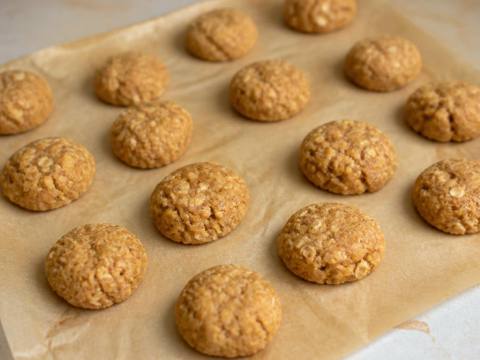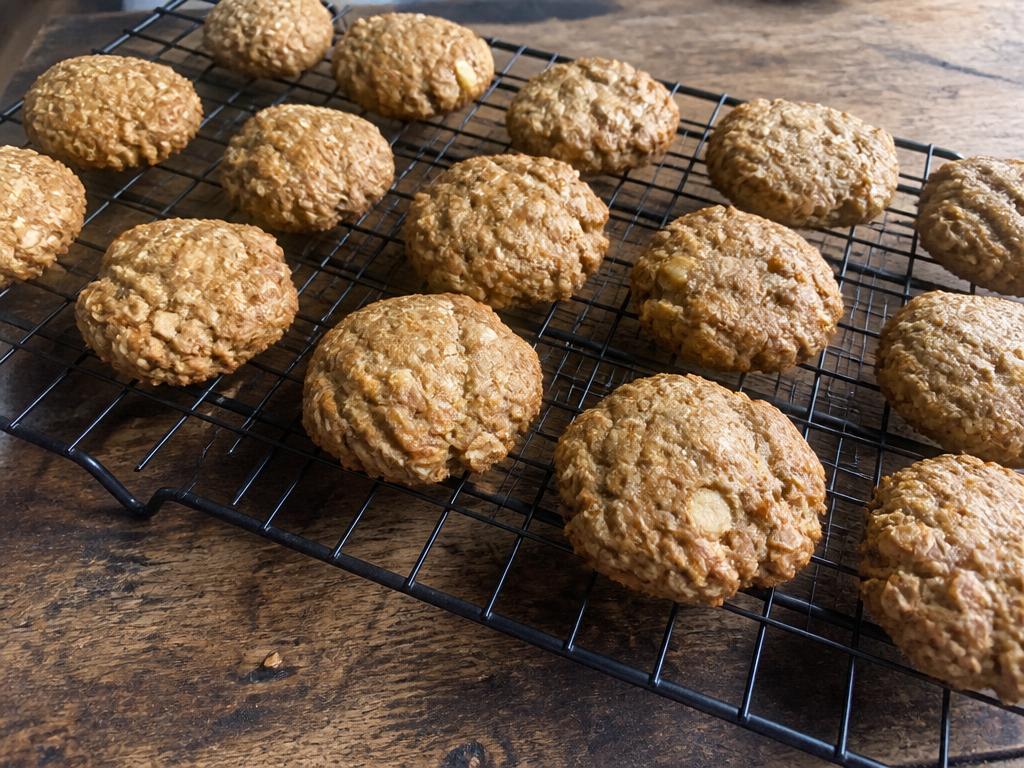
Storage
- These contain fresh fruit or egg and no preservatives, so they belong in the fridge in an airtight container, not on the counter. Refrigerate within 2 hours of cooking, or within 1 hour if the room is above 32 °C (90 °F), and split a warm batch into shallow containers so it chills quickly.
- A storage life has not been established for this recipe. Make small batches, and freeze the portions you want for later at −18 °C (0 °F) or below. Thaw in the fridge, never on the counter.
- Harmful bacteria can be present without any change in smell or appearance, so time and temperature decide, not how a treat looks. Discard anything left in a warm room too long, or kept past these limits — chilling or freezing does not make mishandled food safe.
Sources: Cold food storage chart (FoodSafety.gov) · Food safety basics (USDA FSIS)
Serving considerations
- These cookies are occasional treats, not a meal and not a complete and balanced diet.
- Peanut butter is calorie-dense, so keep portions small and count treats as part of daily intake.
- Serving amounts vary with your dog's size, health and normal diet — ask your vet what suits your dog.
- Apple seeds and core should always be removed, and never add sugar, honey, salt, chocolate or artificial sweeteners.