The full answer
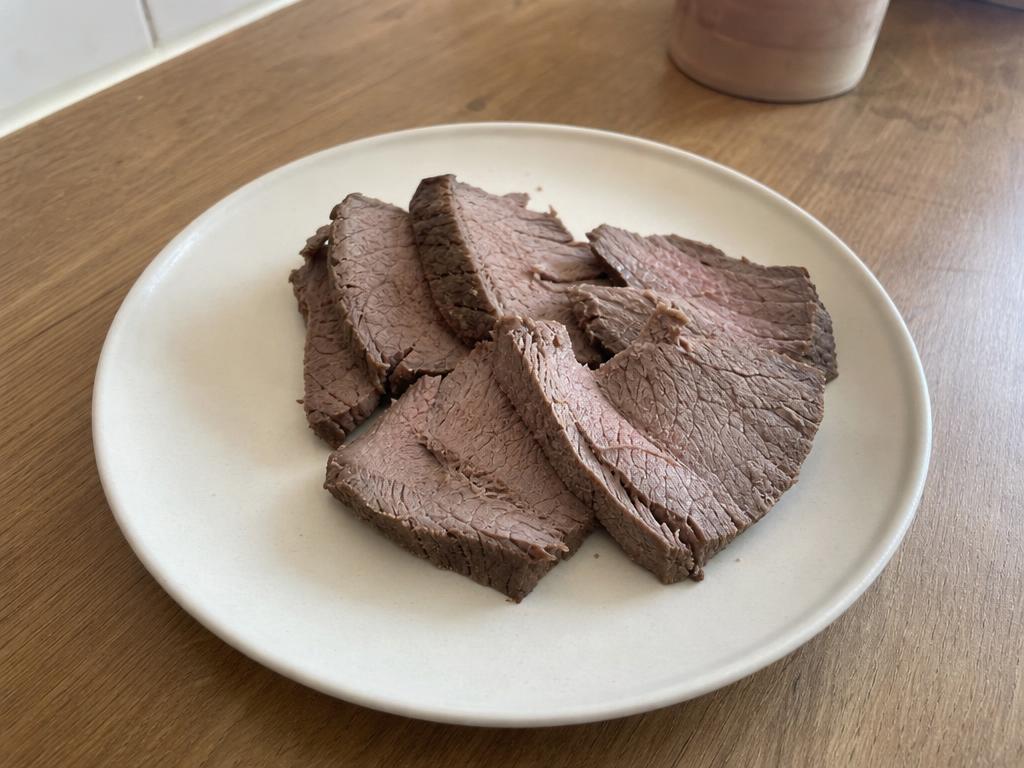
Beef is one of the most common protein sources in commercial dog food, and plain home-cooked beef is generally well tolerated. Whether it suits your dog depends far more on how it is prepared than on the meat itself: plain and thoroughly cooked is the version that counts as safe.
Lean cuts are the better choice. Fatty trimmings, rich cuts and pan drippings deliver a large amount of fat in a small volume, which commonly causes digestive upset and is a recognised trigger for more serious problems such as pancreatitis in susceptible dogs. Trim visible fat, drain any grease, and skip the crispy fatty edges.
Ground beef is fine on the same terms — cook it through, drain the fat, and add nothing to it. The problems with ground beef usually come from the extras: salt, onion, garlic, sauces, seasoning mixes and burger toppings. A hamburger patty from a restaurant is a seasoned product rather than plain beef.
Raw beef is a separate discussion. Raw meat can carry bacteria such as Salmonella and can pose a handling risk to the household as well as to the dog, and veterinary bodies are broadly cautious about raw feeding. Kyo's Kitchen recommends cooking beef, and suggests talking to your vet before starting any raw diet.
Cooked bones should never be given. Cooked beef bones can splinter and cause choking, mouth injuries, obstructions or perforations, and even large weight-bearing bones can fracture teeth. Ask your vet about safer chew options instead.
Finally, plain beef is a treat or a topper, not a diet. On its own it does not provide the balanced vitamins, minerals and nutrients a dog needs, so it should sit alongside a complete, balanced food rather than replacing part of it.
Is Beef Good for Dogs?
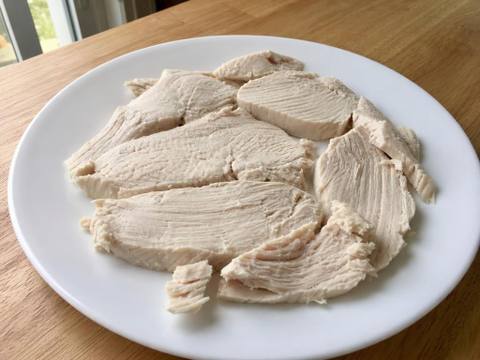
Plain boiled, baked or grilled lean beef, cut into bite-sized pieces
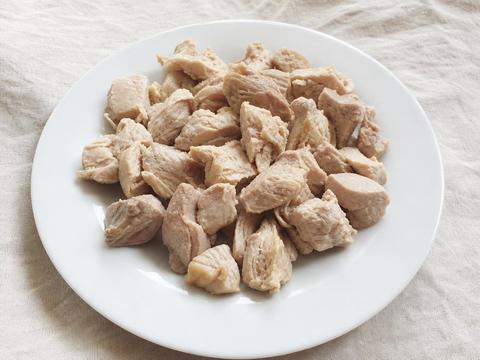
Plain cooked ground beef with the fat drained, as a small food topper
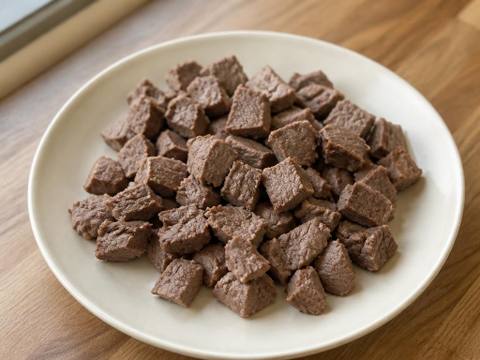
Small pieces of plain cooked steak with no seasoning, sauce or butter
Home-made beef training treats made with nothing but plain cooked meat
Potential benefits
- A source of complete protein that most dogs find highly palatable
- Useful as a high-value training reward in very small pieces
- Provides nutrients such as iron, zinc and B vitamins as part of a varied diet
- Handy topper for tempting fussy eaters, with veterinary guidance if appetite is a concern
Risks and Things to Know
- Seasoning is the main problem — salt, onion, garlic, spice rubs, marinades and sauces are not dog-safe
- Fat trimmings, rich cuts and pan grease can cause digestive upset and are linked to pancreatitis risk
- Cooked beef bones can splinter and cause choking, obstruction or fractured teeth
- Raw beef can carry bacteria that affect both the dog and the household
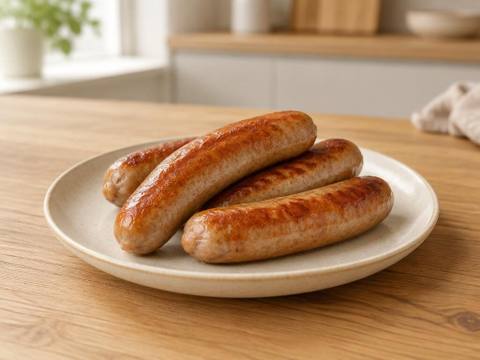
- Processed beef products such as burgers, sausages and jerky are usually salty or seasoned
- Beef broth and stock frequently contain onion or garlic — check the label
How Much Can Dogs Eat?
There is no single correct amount of beef for every dog. The right portion depends on your dog's size, calorie needs, health and the rest of their diet. A widely used general principle is that treats — including meat — should stay a small share of daily calories, with the bulk coming from a complete, balanced dog food. Start with a small piece the first time and see how your dog gets on before offering more. If your dog is overweight, has pancreatitis in their history, or is on a prescribed diet, check with your vet first.
How Should I Prepare It?
- Choose a lean cut and trim off visible fat.
- Cook it thoroughly — boil, bake, grill or dry-fry with no oil.
- Add nothing: no salt, pepper, garlic, onion, marinade, sauce or butter.
- Drain any fat or grease and let the meat cool completely.
- Remove all bones and cut the meat into bite-sized pieces.