Turkey & Pumpkin Meatballs

Two ingredients plus a binder, baked through until fully cooked. No salt, no gravy, no seasoning of any kind.

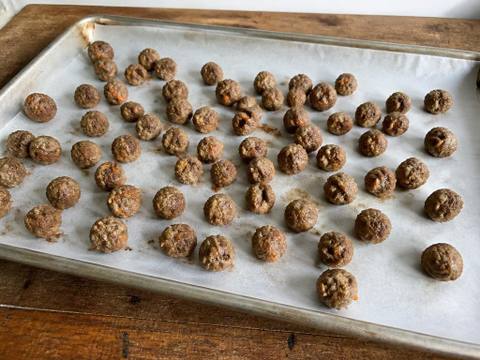
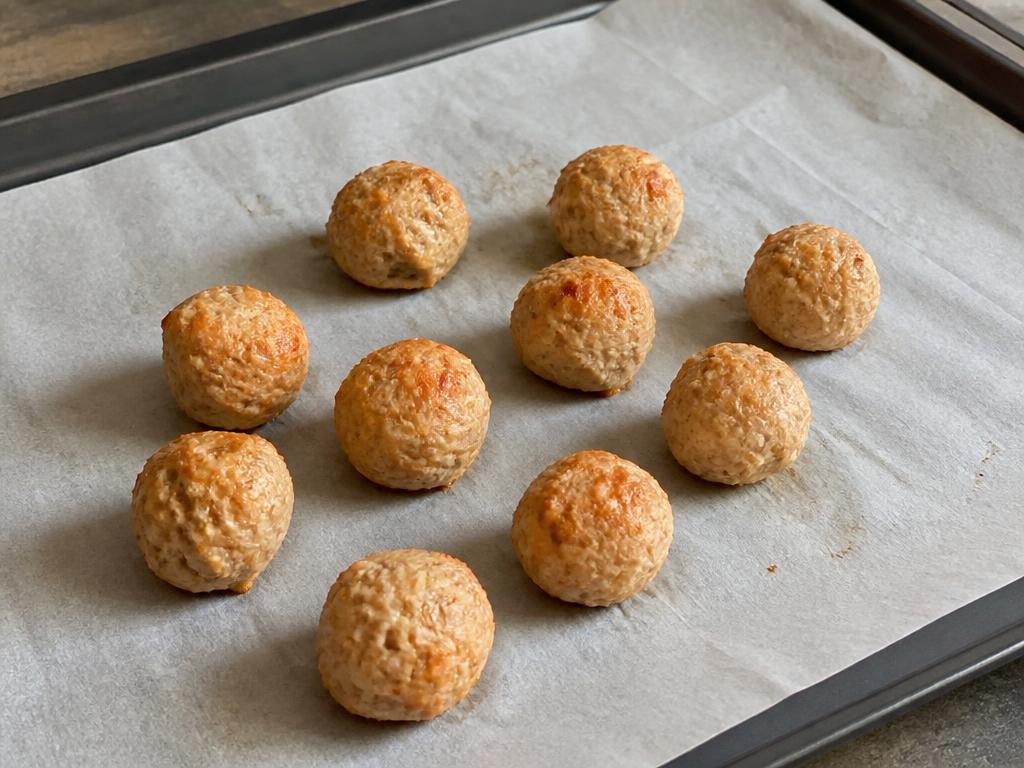
Small plain cooked turkey and pumpkin meatballs on a parchment-lined baking tray, with no sauce or garnish
Prep
15 minutes
Cook
25 minutes
Total
40 minutes
Difficulty
Easy

Working out portions? See how many treats a dog can have before you make a full batch.

Kyo's Kitchen recipe card

Turkey & Pumpkin Meatballs

Makes About 18 small meatballs · 40 minutes total

Ingredients

  • 500 g lean ground turkey, plain and raw (not deli turkey, not seasoned or brined mince)
  • 1/2 cup plain pumpkin puree (100% pumpkin, no spices or sweetener)
  • 1/2 cup rolled oats, blitzed to a rough flour
  • 1 large egg, if the mixture feels loose

Instructions

  1. 1Heat the oven to 190C / 375F and line a rimmed baking sheet with parchment.
  2. 2Mix the turkey, pumpkin and oats with clean hands or a spoon until just combined. Add the egg only if the mixture will not hold a ball.
  3. 3Roll small meatballs about 2 cm across and space them on the tray so they cook evenly.
  4. 4Bake 22-25 minutes until firm and cooked all the way through with no pink centre. Poultry must reach 74C / 165F internally; check the largest one with a thermometer if you have one.
  5. 5Drain any fat and let them cool completely before serving. Break one open to confirm the middle is fully cooked.

Storage

  • Keep them in an airtight container in the fridge and use within 3 days; that follows general guidance for cooked leftovers, not testing of this recipe. Refrigerate within 2 hours of cooking, or within 1 hour if the room is above 32 °C (90 °F), and split a warm batch into shallow containers so it chills quickly.
  • Freeze what you will not use in that time at −18 °C (0 °F) or below. General freezer guidance for cooked meat leftovers is 2 to 6 months for quality, and we keep to the short end of it. Thaw in the fridge, never on the counter.
  • Treat them like cooked poultry for people: serve within 2 hours of coming out of the fridge, refrigerate leftovers straight away and do not reheat repeatedly.
  • Harmful bacteria can be present without any change in smell or appearance, so time and temperature decide, not how a treat looks. Discard anything left in a warm room too long, or kept past these limits — chilling or freezing does not make mishandled food safe.

Sources: Cold food storage chart (FoodSafety.gov) · Food safety basics (USDA FSIS)

Serving considerations

  • These are richer than a biscuit, so one small meatball is a treat rather than a meal component.
  • Treats should stay a small share of daily intake; the right number depends on your dog's size, weight and normal diet.
  • Cut meatballs in half for small dogs so nothing is swallowed whole, and supervise while your dog eats.
  • Turkey must be fully cooked and completely unseasoned; skip drippings, gravy and anything from a seasoned roast.
  • Ask your own vet before adding a meat-based treat if your dog needs a low-fat or prescription diet.
Ingredient safety notes

This guide is for general educational purposes and isn't a substitute for advice from your veterinarian. If your dog has eaten something potentially toxic or is showing concerning symptoms, contact a veterinarian promptly.

Frequently Asked Questions

No. Deli meat and roast dinners are salted and often seasoned with onion or garlic. Start from plain raw lean ground turkey and cook it yourself with nothing added.

Poultry needs to reach 74C / 165F in the centre. Check the largest meatball with a thermometer, or cut one open and confirm the middle is opaque with no pink and clear juices.

Baking is better here. Frying adds fat and browns the outside before the middle is done, and these need to be cooked through with nothing added.

A treat. They are not a complete balanced diet, so serve them alongside your dog's normal food rather than in place of it, and keep treats a small share of the day's intake.

Cook them first, then freeze. Cooked meatballs freeze well for up to two months and thaw safely in the fridge, which avoids handling raw poultry twice.